Share


Share
Nestlé is the world’s largest food and beverage company. It is present in 187 countries around the world, and its 291,000 employees are committed to Nestlé’s purpose of enhancing quality of life and contributing to a healthier future.
Nestlé is the world’s largest food and beverage company. It is present in 189 countries around the world, and its 277,000 employees are committed to Nestlé’s purpose of enhancing quality of life and contributing to a healthier future.
Earthworm Foundation is helping Nestlé identify the origin of its raw materials for palm oil, pulp & paper, coconut, cocoa, wheat, corn, peas and sugarbeet. It also works closely with its suppliers to develop and implement strategies that meet the Nestlé Responsible Sourcing Standard across priority commodity supply chains, with the goal of delivering positive outcomes for climate, nature, and the resilience of people and communities.
What Nestle did for Nature and People - Membership Annual Reports
2023
2022
In 2025, Nestlé and Earthworm Foundation jointly participate in a new project embedded in a landscape initiative in Brazil Tomé-Açu, to promote a sustainable, long-term palm oil sourcing while also creating shared value for people and nature. The project focuses on forest conservation and restoration , regenerative agriculture, formalization of IPLC landrights, aiming to deliver environmental and social benefits through a holistic, landscape-level approach.
Earthworm develops a scalable model to help cooperatives and storage groups support farmers in applying regenerative practices across crop rotations, extending beyond Nestlé supply contracts. This shift enables local actors to take over monitoring and support, while connecting farmers to markets that value their environmental commitment.
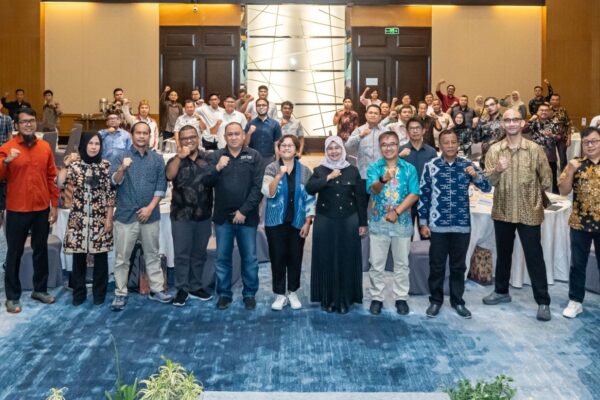
In 2024, Nestlé and Earthworm hold a multistakeholder workshop in Jakarta with 30 industry representatives to address human rights in Indonesia's recycled paper supply chain. This initiative aims to foster collaboration among government, private companies, Civil Society Organizations, and buyers to improve worker wellbeing and supply chain transparency.
Nestlé and Earthworm launch a multi-year Climate Landscape Project in Peru to advance regenerative agriculture, agroforestry, and forest restoration. The project aims to reduce and remove greenhouse gas emissions and create a sustainable landscape model.
Through its Center for Social Excellence (CSE) programme, Earthworm provides training to major Brazilian pulp suppliers to Nestlé on effective engagement with Indigenous and traditional communities, with a focus on ensuring Free, Prior and Informed Consent (FPIC) before project initiation.
In Guatemala, Nestlé and Earthworm continue collaborating with GREPALMA through the Social Performance Project to strengthen social practices and address key human rights risks in the palm oil sector by fostering learning and collaboration among stakeholders.
Nestlé and Earthworm Foundation, alongside suppliers SCA and DS Smith, launch the Assessment of Västerbotten County Healthy Forest Landscape to provide insights into Västerbotten’s changing forests, their impact on ecology and society, and propose practical recommendations in a finalized report.
Nestlé launch a No-Deforestation pilot in the Davao region of the Philippines, to map their coconut ingredient supply chains, identifying deforestation linked to coconut expansion, and assessing remaining forest areas. The assessment is completed with on-the-ground stakeholder consultations.
In 2023, the Forest Footprint tool is developed and adapted to assess forest conservation and restoration in sugar (Veracruz, Mexico) and soy (Mato Grosso, Brazil) sourcing areas.
Nestlé achieves 98% deforestation-free status for pulp and paper packaging in scope, based on a total known volume of 1.25 million metric tons.
In 2022, the Starling satellite solution monitors over 11’000 concession boundaries in Nestlé palm supply chain to assess if the origins are deforestation free or if further supplier engagement and investigation is needed. At the end of 2022, 96% of Nestlé palm oil source is assessed as deforestation free.
Earthworm, in partnership with Nestlé Purina, and after a first pilot of 4 projects in 2021, launches an agroforestry programme to support farmers in the Living Soils programme in northern France to plant hedges and trees within their fields. 24 kilometers of hedges are planted during this first year.
Nestlé achieves 96% deforestation-free status for palm oil in scope, based on a total known volume of 458,000 metric tons
Nestlé supports Earthworm Foundation’s landscape initiatives in Malaysia and Indonesia, promoting regenerative agriculture and forest conservation in Sabah, sustainable production and labour practices in Aceh (Nestlé’s longest-standing palm oil project), and co-designing a multi-year work plan for the Southern Central Forest Spine (SCFS) Landscape initiative, launched in 2021
Nestlé and Earthworm Foundation advance social and human rights in palm oil supply chains through ethical recruitment training (ERDD) for 10 Malaysian companies, child protection training for 16 companies, and fair wage guidelines in Indonesia, securing permanent status for 93+ workers with wages, benefits, and maternity leave
In partnership with Nestlé France, Earthworm Foundation conducted a pilot programme from 2018 to 2020 in France to trial regenerative agriculture practices and developed an agronomic reference framework with the Scientific Council, 5 suppliers and around 200 farmers are enrolled in Earthworm’s Living Soils programme and trained in the principles of Regenerative Agriculture.
Through 2019, Earthworm Foundation supports Nestlé in ongoing engagements with key suppliers to transform practices in four prioritised pulp & paper landscapes in key origin countries: north-west Russia; British Columbia, Canada; south-east US; Sumatra, Indonesia and northern Brazil
Nestlé and Earthworm Foundation conduct the first supplier assessment for Responsible Sourcing of Coconut in Sri Lanka, followed by a second assessment in Indonesia in October. First supply chain mapping exercise for coconut materials conducted
Nestlé begins collaboration with Côte d’Ivoire’s Ministry of Water and Forests, the Ivorian Forest Development Corporation (SODEFOR) and Earthworm Foundation to protect and restore the Cavally Forest Reserve and improve the resilience of cocoa farmers and communities. This is the beginning of the Cavally landscape project (Phase 1).
One of the seven Rurality projects Nestlé supports around the world has developed and submitted a participatory community land use plan that includes conservation of 3,830 hectares of forest in Indonesia
Nestlé commits to digital solutions by announcing 100% satellite monitoring for deforestation of palm oil supply chain via Starling Satellite monitoring, and piloting the system in an additional four key pulp and paper sourcing landscapes. Nestle as well uses a cloud-based tool developed with SupplyShift aimed at improving collection, analysis and access to pulp & paper supply chain data
Engagement begins with recovered fibre suppliers in Brazil
Engagement begins on the ground with Nestlé pulp & paper suppliers in the Dvinsky intact forest landscape in Russia, marking the start of over three years of intensive work to help preserve this vital area
Nestlé initiates collaborates with Earthworm Foundation’s Rurality programme for smallholder farmers, working with oil palm farmers in Malaysia
Nestlé’s first Rurality pulp & paper project is initiated in Vietnam.
After 4 years of the agroforestry programme in France, it is 115 projects supported and nearly 200 000 trees planted.


Palm oil is a highly versatile and inexpensive vegetable oil used in many consumer goods products. It is also an extremely efficient crop, producing as much as 10 times per hectare as other vegetable oils. But its role as a major driver of economic growth is also associated with the loss of tropical forest habitats.
Earthworm drives transparency in Nestlé’s palm oil supply chain, monitoring suppliers’ progress in meeting Nestlé’s Responsible Sourcing Standard. We collaborate on various assessments, transformation and verification projects, assessing high-risk suppliers globally, and using Starling satellite technology to monitor deforestation in hotspot regions.
On human rights and community well-being, we work to strengthen labour rights for plantation workers in Malaysia and Indonesia through programmes like the Labour Transformation Programme (LTP) and the Ethical Recruitment Programme (ERDD). We also work on addressing children in plantations in Sabah, Malaysia. In 2024, we started carbon projects embedded in landscape initiatives in Mexico and Peru, using regenerative agriculture, agroforestry and conservation and restoration practices to positively impact farmers and climate.
Cocoa supports millions of farmers and workers globally but faces systemic issues such as deforestation, child labour, and low farmer incomes.
Earthworm addresses these issues by promoting responsible sourcing, restoring ecosystems, and strengthening farmer resilience through landscape and supply chain transformation in collaboration with its members.
Since 2020, Nestlé has partnered with Earthworm and the Ivorian government to implement the Cavally Landscape Project in Côte d'Ivoire. This initiative focuses on protecting and restoring the Cavally Forest Reserve, a critical biodiversity hotspot threatened by cocoa-driven deforestation. In its first phase, the project achieved significant milestones, including the natural regeneration of 7,000 hectares and the reforestation of nearly 1,500 hectares. Additionally, over 1,200 community members benefited from the project, enhancing local economic resilience.
Forests are under increasing pressure from human activity, resulting in forest loss and degradation. The forest product industry can contribute to these pressures but is also an essential part of the solution to keep forests thriving and restore forest values.
Pulp and paper are integral to daily life, yet their production can be associated with deforestation, ecosystem degradation, and social challenges. Earthworm Foundation works with members, partners and suppliers to drive responsible sourcing, improve transparency, and support on-the-ground transformation- from forests to mills - to protect landscapes and livelihoods.
This work continues today with projects in key sourcing areas where we focus on specific supply chain risks such as deforestation, forest degradation and human rights. Our projects aim to reduce the pressure on ecologically important forests, empower local Indigenous Communities and improve the livelihoods of informal waste pickers in recycled fibre supply chains, amongst other goals.
Starling
We use Starling satellite monitoring to identify and address cases of deforestation. We support Nestlé with their forest positive strategy by building transparency and traceability throughout their supply chain and engaging smallholder farmers and large suppliers alike in order to address deforestation in global supply chains.
Earthworm partnered with Nestlé to support the early stages of their Responsible Sourcing efforts for coconut products.
In 2019, we began to map Nestlé’s coconut supply chain and conducted baseline assessments in sourcing regions. Supply chain mapping led to engagement of suppliers in 2023 and field visits of their processing sites, supplying farms and other supply chain actors (e.g. Huskers), in Sri Lanka and the Philippines to assess key supply chain risks and opportunities in their supply chain, related to environmental and social topics, and agriculture practices.
These visits highlighted the potential to leverage Regenerative Agriculture in coconut farms to address the most pressing issues in the supply chain, such as productivity, working conditions, and livelihood, and led to the development of a handbook of regenerative agriculture practices for coconut suppliers.
Nestlé is also working with Earthworm on collective approaches in regenerative agriculture in Europe.
The Sols Vivants (Living Soils) programme with Nestlé France promotes regenerative agriculture to improve soil health, store carbon, and strengthen the resilience of farming systems. According to the FAO, such practices deliver economic, agronomic, and environmental benefits while contributing to climate change mitigation.
Sols Vivants is built on three key pillars:
By assigning economic value to carbon storage and ecosystem services, Sols Vivants helps farmers generate additional income while reducing the financial risks associated with more sustainable practices.
Sols Vivants started to take roots in 2018, when Nestlé partnered with the Earthworm Foundation to launch a pilot project in the Santerre region of Northern France, involving over 30 farmers. The pilot laid the foundation for expansion and enabled the development and calibration of its first agronomic framework.
Following this initial success, Nestlé France engaged additional suppliers, starting with five and later explanding to ten, to join the initiative. Today, Sols Vivants counts over 400 farmers who collectively supply Nestlé with more than 120,000 tons of wheat, corn, peas, and sugar beet. As a result, in 2024 27% of Nestlé France’s agricultural sourcing now comes from regenerative agriculture.
To support this transformation, Nestlé provides funding for technical assistance and actively promotes sustainable farming. The initiative’s innovative financial models further strengthen its impact by compensating farmers for their role in delivering environmental services.
Learn more here:
https://earthworm.org/fr/our-work/areas-of-work/living-soils
Regenerative Agriculture at Nestlé (FAT):
https://www.nestle.com/sites/default/files/2022-12/nestle-agriculture-framework-measures.pdf
Cross-commodity
Nestlé is involved in seven mature landscapes across key agricultural regions, focusing on promoting sustainable practices and ethical supply chains. These landscapes include Sabah and SCFS in Malaysia, Riau and Aceh in Indonesia, Cavally Natural Forest Reserve in Côte d'Ivoire, Longitudinal Landscape in Peru, and Chiapas in Mexico. The main focus includes improving environmental and social practices in the production of commodities such as palm oil, cocoa, and pulp and paper with a strong focus on Resilient People, Nature and Climate.
For more details, listed below are the mature Landscapes in which Nestlé is involved in:
The Protéi'Sol project aims to develop local production of protein-rich crops in order to reduce dependence on imported soybeans and the resulting environmental impact.
By encouraging the integration of legumes into crop rotation, the project improves soil health, biodiversity, and carbon sequestration, while offering sustainable and economically viable alternatives for animal feed within regional supply chains.
This project is coordinated by the Earthworm Foundation and brings together key players in the agricultural and food system, including the NORIAP Group (agricultural cooperative), Terres Inovia (technical expertise and agronomic research), Novial (a subsidiary of NORIAP specializing in animal feed manufacturing), and industrial and retail partners (Nestlé-Purina, Lidl France, Auchan, Groupement Mousquetaires). The project receives financial support from the European Union and the Hauts-de-France region.
Purina is committed to the project: “With Protéi'sol, we are exploring local alternatives for integrating plant proteins into our products, in line with our ambitions for more sustainable pet food and our goals for deploying regenerative agriculture in our supply chains.
For more information, visit this page.
There are also other emerging Landscapes, in which Nestlé is involved in, that have not yet reached full maturity.
Agrofestry with Purina
Since 2021, Purina has been actively funding agroforestry initiatives among farmers within its supply chain in the Hauts-de-France region. Agroforestry offers numerous benefits, with projects co-designed with farmers to address key issues such as soil erosion, wind protection, biodiversity loss, carbon storage, water resource optimisation, and animal welfare. The financing for these projects is derived from a combination of private investments (from Purina) and public funding (subsidies), with technical expertise provided by Earthworm and local partners.
Additionally, Purina is dedicated to supporting farmers for a period of four years following the establishment of hedgerows or other agroforestry systems. This support includes training in hedge management and enhancement as well as and replanting of stems in the year subsequent to initial planting for the trees that did not take roots.
Purina also plays a significant role in advancing agroforestry in the Hauts-de-France region by funding research and development studies related to agroforestry data. Furthermore, the company is a member of a coalition of stakeholders aimed at uniting efforts to scale-up agroforestry in the region.
As of June 2025, the agroforestry program has facilitated the planting of close to 200,000 trees and shrubs, equating to approximately 156,000 linear meters of hedges and more than 177 hectares across 112 farms. In 2025 Purina is broadening the scope of its agroforestry initiatives to more regions.