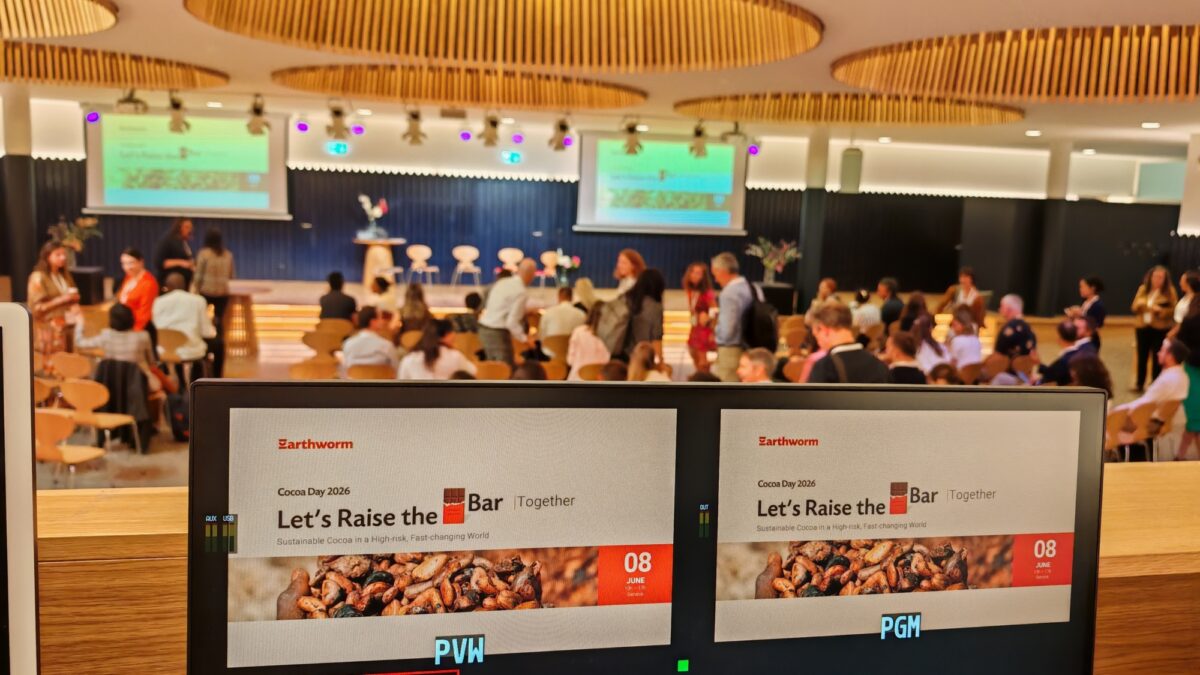
Raise the Bar, Earthworm Foundation’s first cocoa-centred event, was convened at a pivotal moment for the sector.
Cocoa value chains are facing mounting and overlapping pressures, from climate change and declining productivity to deforestation, evolving regulations, and growing scrutiny of social conditions.
At the same time, there is increasing recognition that current approaches are not delivering the scale or pace of change required.
With over 80 stakeholders representing more than 30 chocolate companies, retailers, suppliers, and financial institutions, the event created space to collectively reflect on a critical question: What will it take to secure a sustainable, resilient, and equitable cocoa sector in the years ahead?
The objective was to identify what is preventing progress, highlight what is working, and align on practical directions to scale impact.
The following are the key learnings from each session of the day.

Revitalising Production & Strengthening Livelihoods
Core Takeaway: The cocoa sector is facing a systemic crisis, and recovery requires a shift from fragmented, short-term interventions to long-term, farmer-centred and landscape-based transformation.
Key Challenges
- Interlinked crisis: productivity decline, climate change, disease, and poverty.
- Significant supply loss risk (up to 40% by 2040).
- Continued failure to effectively address farmer income.
- Fragmented supply chain approaches.
- Insufficient long-term investment.
Solutions & Directions
- Put farmer livelihoods at the centre
- Scale agroforestry and diversification; consider intercropping farm models.
- Invest in long-term (10–20-year) transformation models, especially in areas needing completed rehabilitation (e.g., farms affected by Swollen Shoot Disease).
- Combine coordinated supply chain and landscape approaches.
- Combine policy, finance, and interventions.

Deforestation, Resilience & Human Rights in Production Frontiers
Core Takeaway: Deforestation in cocoa frontiers cannot be solved through compliance alone; it requires land-use trade-offs, strong community engagement, and inclusive development models.
Key Challenges
- Massive expansion into forest frontiers (e.g., Liberia, Cameroon, Peru).
- Blurred lines between legal and illegal deforestation.
- Weak land-use planning frameworks.
- Social risks (indigenous communities, labour exploitation).
- Limited understanding of local dynamics.
Solutions & Directions
- Implement landscape-level land-use planning.
- Engage communities and local governments early.
- Balance conservation and development realities.
- Improve understanding of social dynamics, including indigenous groups.
- Invest in alternative livelihoods to reduce pressure on forests.

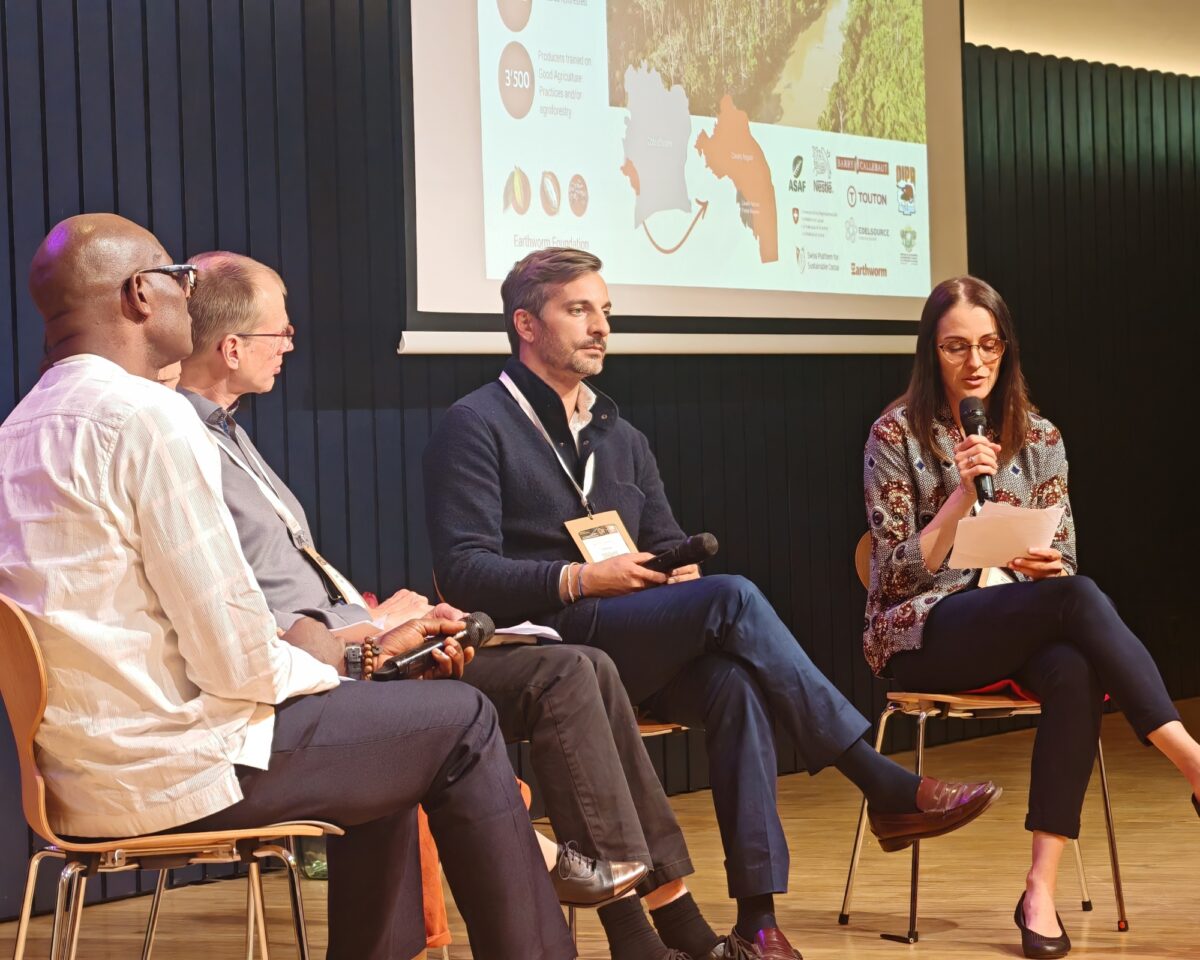
Cavally: A Landscape in Action
Core Takeaway: Landscape initiatives such as Cavally demonstrate that collective, locally anchored action can deliver measurable impact but require trust, coordination, and long-term commitment.
Key Challenges
- No single actor can drive impact at scale alone.
- Aligning companies around collective action remains challenging, particularly where the business case or direct benefits are not immediately apparent.
- Risk of short-term engagement for solving issues that need long-term vision and engagement.
- Need to exit the project at some point, and thus develop robust exit strategies that can sustain the impact over the long term.
Solutions & Directions
- Build multi-stakeholder partnerships in which transparency and trust are key foundations.
- Leverage expertise, resources, and financial means to bring impact at scale
- Ensure strong local ownership.
- Establish strong monitoring systems (satellite and field-based) to follow progress, inform strategies, and measure impact.
- Design and implement interventions with communities, embedding activities within existing local governance and community systems.
- Develop long-term governance structures and sustainable financing mechanisms (e.g., carbon finance and other blended finance approaches) to ensure the continuity of outcomes beyond the project period.
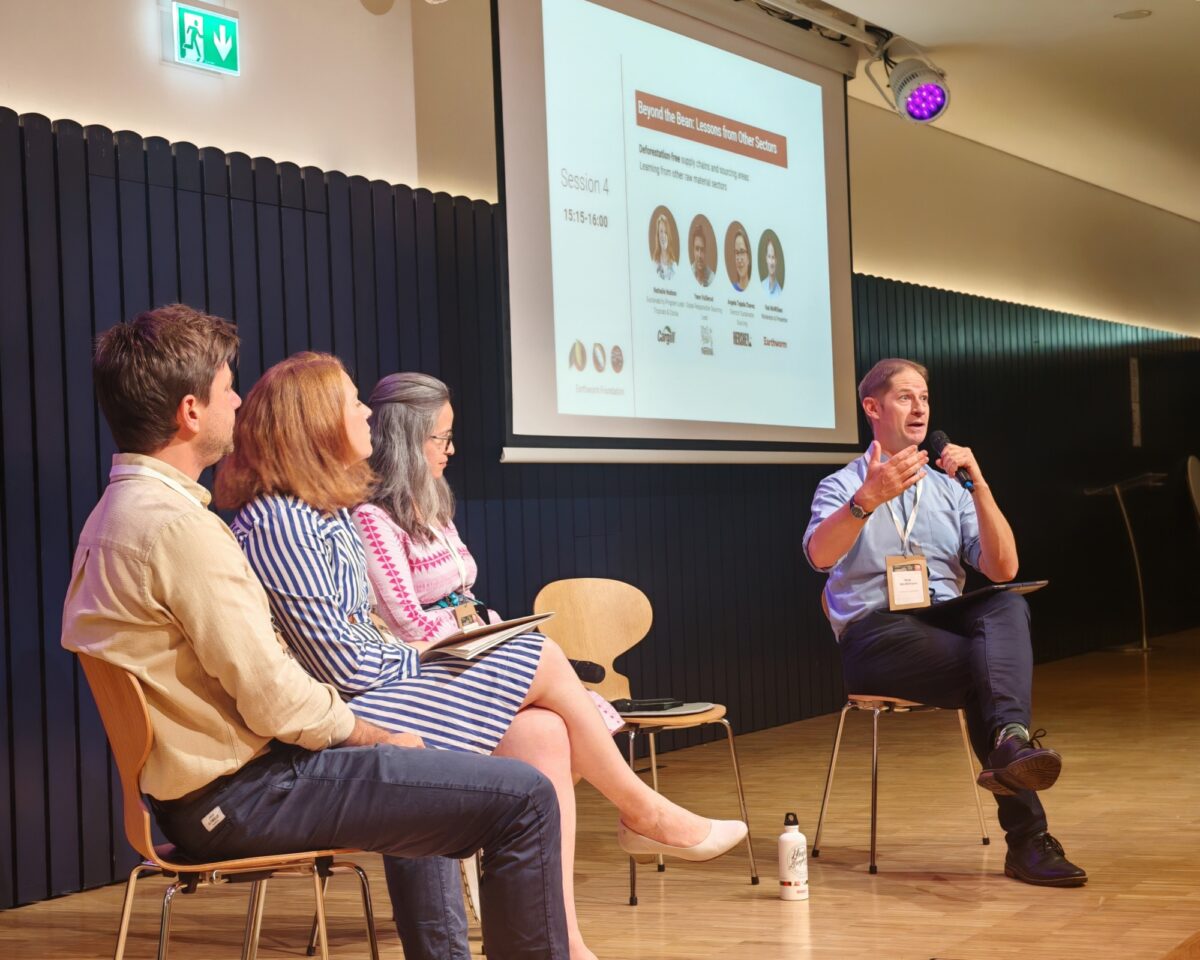
Beyond the Bean: Lessons from Other Sectors
Core Takeaway: Other commodities show that progress comes from aligned commitments, shared frameworks, and moving beyond compliance toward resilience.
Key Challenges
- Over-focus on compliance and traceability.
- Lack of alignment across stakeholders.
- Resource-intensive monitoring systems.
- Difficulty translating commitments into impact.
Solutions & Directions
- Align on common frameworks and definitions.
- Shift focus toward resilient production systems.
- Integrate sustainability into core business strategies, including procurement.
- Focus on action over reporting.
Where Do We Go From Here
Core Takeaway: The sector must move from analysis and compliance toward action and transformation, embracing uncertainty, collaboration, and long-term commitment.
Key Challenges
- Over-reliance on top-down approaches.
- Fear of failure slowing down innovation.
- Disconnect between strategy and field realities.
- Underinvestment in on-the-ground implementation.
Solutions & Directions
- Adopt a test-and-learn mindset.
- Scale what already works.
- Empower bottom-up, farmer-led change.
- Focus on impact over perfect measurement.
- Encourage first movers and fast followers.
Overall Event Synthesis
Across all sessions, a clear shift emerged:
From → To
- Supply chains → Landscapes
- Compliance → Resilience
- Pilots → Scale
- Top-down → Bottom-up
- Short-term → Long-term transformation
Final Reflection: The coming years will be decisive. The choices made now will determine whether the cocoa sector can transition toward a resilient and sustainable system, or whether risks continue to deepen.
The priority is clear: move from intention to implementation, and from isolated efforts to collective action at scale.