Earthworm Foundation and the Governors’ Climate and Forests (GCF) Task Force are beginning a three-year collaboration to connect government priorities, field experience and investment across tropical forest landscapes.
Deforestation rarely comes down to one product, company or policy.
Across a single landscape, decisions about farming, land use, public policy, investment and livelihoods interact. A company may change how it sources cocoa or palm oil. A government may introduce a forest strategy. A community may be working to protect or restore its land.
But when those efforts remain disconnected, progress can stop at the boundary of a project, concession or supply chain. That is the challenge behind a new collaboration between Earthworm Foundation and the Governors’ Climate and Forests Task Force.
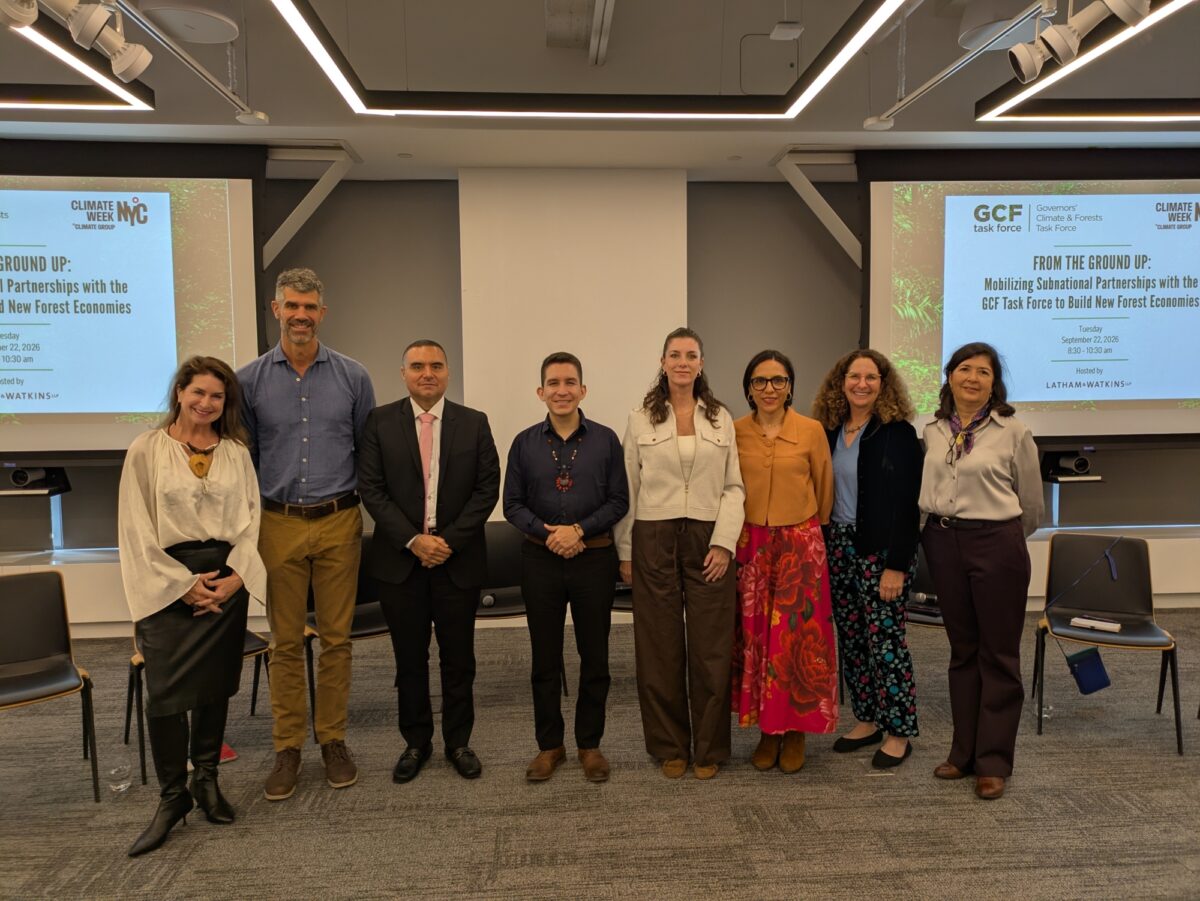
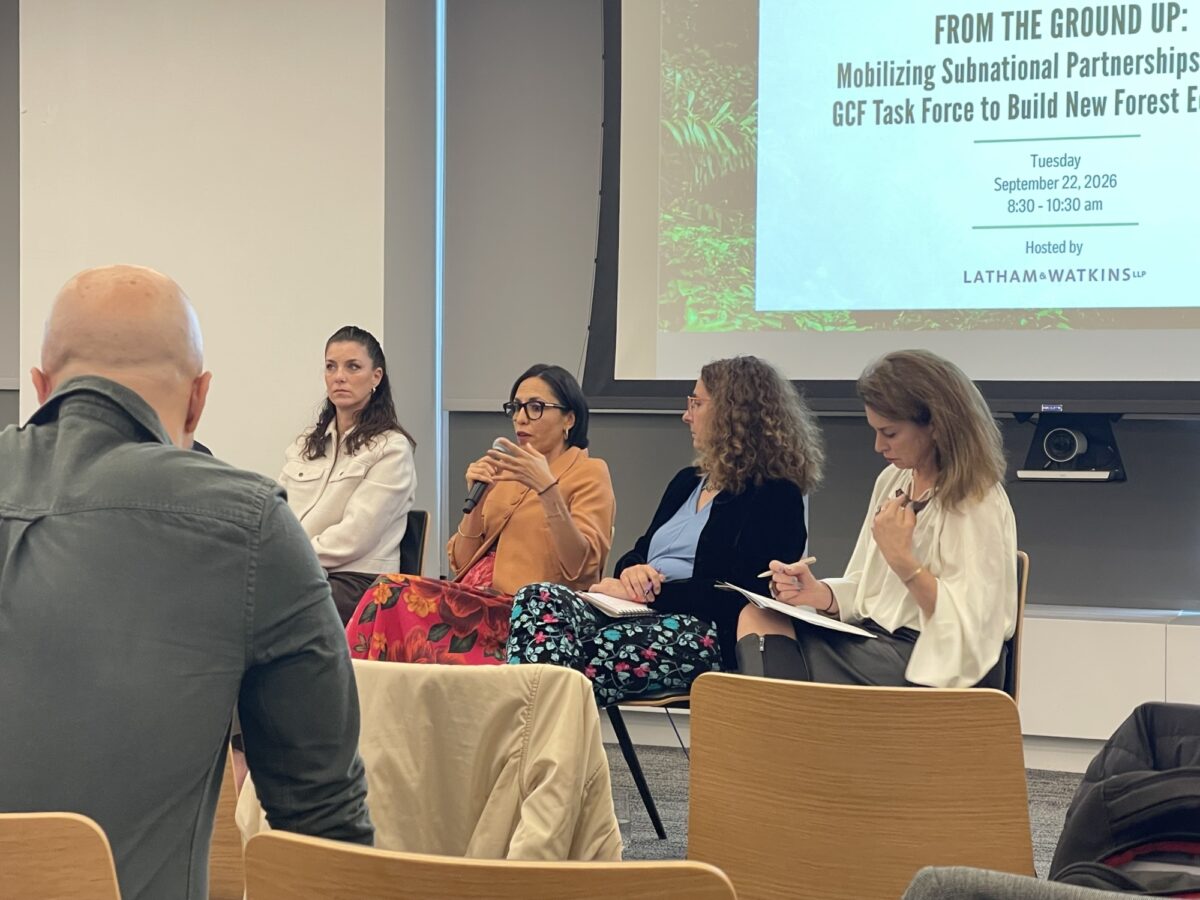
On 22 September, during Climate Week NYC, the two organisations formalised a three-year Letter of Intention setting out how they plan to work together in tropical forest regions.
Why work together?
The GCF Task Force connects 54 states and provinces across 11 countries. Together, its member jurisdictions encompass more than one-third of the world’s tropical forests.
Its network brings together governors, civil servants, Indigenous Peoples and Local Communities, civil society and businesses. Its aim is to reduce deforestation and emissions while supporting economies that value standing forests and the people who depend on them.
Earthworm works with businesses, farmers, communities and governments to change how forest-risk commodities, including palm oil, cocoa, rubber, pulp and paper, and soy, are produced and sourced.
The two organisations already work in several of the same countries, including Brazil, Indonesia, Mexico, Cavally Forest Reserve and Peru. The collaboration creates a way to connect the priorities of state and provincial governments with Earthworm’s field experience and relationships across raw material supply chains.
Where the work will begin
The collaboration is intended to begin with at least two regional projects in places where both organisations are active.
The first projects will focus on three areas:
- Bioeconomy: supporting community enterprises, forest-based supply chains and agroforestry systems that create value while keeping forests standing.
- Sustainable commodities: increasing the value and productivity of agricultural production without further land clearing.
- Restoration: restoring degraded landscapes to support biodiversity, carbon storage, water systems and resilience to wildfire.
The organisations also plan to convene at least one knowledge exchange each year. Governors, technical teams and other partners will be able to examine projects, share practical experience and consider what could be adapted to their own regions.
Funding will be central to moving this work forward. Earthworm and the Governors’ Climate and Forests Task Force intend to approach companies, development banks, governments and foundations to support the projects and exchanges.
What they learn will also be shared through joint publications, policy dialogues, learning labs and cross-regional exchanges designed to strengthen institutional capacity and support peer learning across forest jurisdictions. The aim is not simply to showcase successful projects, but to understand why they worked and what it would take to apply those lessons elsewhere.
A starting point
The collaboration creates the structure needed to develop projects and funding for them. The next steps are to agree on a joint workplan, identify potential project locations and secure the resources needed for implementation.
That is where the value of this partnership will ultimately be tested: in whether it helps governments, businesses and communities move from separate commitments towards practical action across whole landscapes.
The challenges facing tropical forest regions cannot be solved by any single actor. Through this collaboration, Earthworm Foundation and the Governors’ Climate and Forests Task Force aim to help governments, businesses, communities and investors work towards shared solutions that keep forests standing while creating lasting economic opportunities.
If your organisation is working on forest conservation, sustainable commodities, restoration or community-led development, we'd welcome the opportunity to connect.