In France, a farmer's appeal has helped bring agricultural and environmental organisations together behind the Pacte Sols Vivants. As extreme weather and economic pressures challenge farming communities, the initiative raises a question that reaches far beyond France: who will help farmers restore the soils on which our food systems depend?
For French farmer Jean-Paul Dallene, protecting agricultural soils is first and foremost a practical reality on the ground.
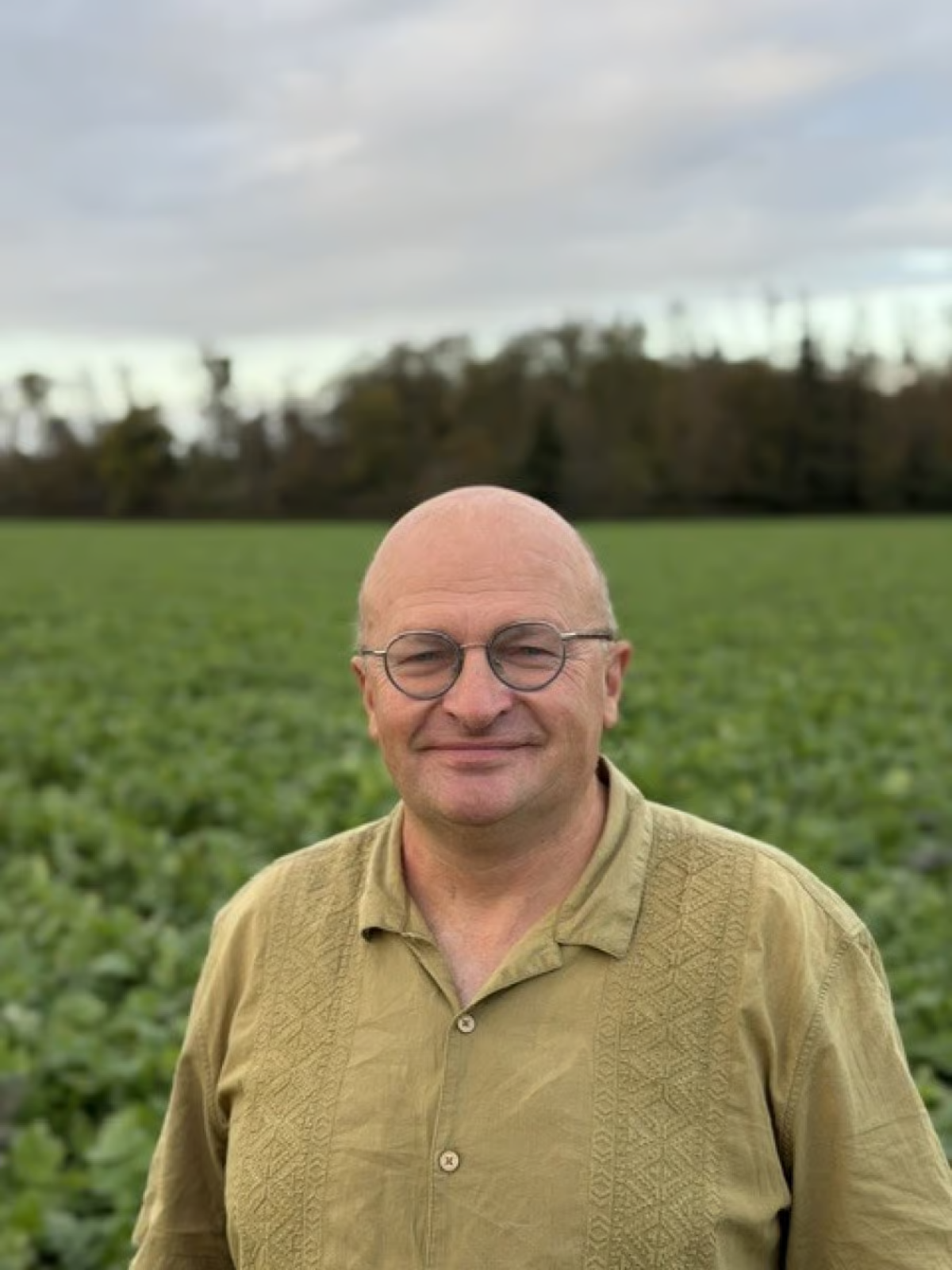
“At the World Living Soils Forum, we'd spent two days discussing the challenges facing our soils. I kept thinking: what can we actually do? That's when I had the idea of bringing these organisations together. Changing practices on one farm isn't enough. We need to act on a much larger scale,” shares Dallenne.
Working with organisations involved in sustainable agriculture, Jean-Paul began questioning why they were pursuing similar ambitions separately. What could they achieve if they combined their influence to bring soil health higher up the political agenda?
In discussions with several organisations working on agricultural transition, Jean-Paul questioned why they often pursued similar objectives separately. What could they accomplish by joining forces to make soil health a political priority? The idea for a collective initiative took shape during the World Living Soils Forum in Arles. After two days of discussions about soil health, he wondered what collective action could achieve in practice. His initiative helped bring together five organisations, APAD, BASE, Bleu-Blanc-Cœur, Earthworm Foundation and Pour une Agriculture du Vivant, behind the Pacte Sols Vivants (Living Soils Pact), a shared call for stronger political commitments to agricultural soils.
The Pact comes after a year of weather extremes for French agriculture.
According to Météo-France, heavy winter rainfall caused major flooding across parts of western and southwestern France. By summer, the country was experiencing its hottest season on record, with 53 days of heatwaves and rainfall nearly 40% below average. Météo-France's summer assessment also recorded unprecedented soil drought at the national level.
The consequences were felt on farms. In Pas-de-Calais, Jean-Paul Dallene says water shortages and unusually intense heat affected his potato production, despite improvements in soil structure achieved through reduced tillage and cover crops. His experience illustrates both the value of healthier soils in managing water and the limits of what individual farmers can do as weather extremes intensify.
Healthy soils can help agricultural land cope with some of these pressures. They absorb and retain water, cycle nutrients, harbour essential biodiversity and support food production. But erosion, compaction, pollution and declining organic matter are progressively weakening these fucntions.
The challenge extends well beyond France. More than 95% of the food we eat depends on soil, yet degradation continues in many parts of the world.
According to the Food and Agriculture Organization of the United Nations (FAO), 58% of regional and subregional assessments reviewed in its 2026 report recorded deteriorating soil conditions since 2015, while only around 10% reported improvements.
Many of the practices that can protect and restore soils are already known. The challenge now is adopting them at scale and making them economically viable for farmers.
The Pacte Sols Vivants calls for soil health to become a stronger priority in French agricultural policy, particularly as the country approaches its 2027 presidential election.
Its proposals include shared indicators to measure soil health, stronger technical and financial support for farmers, and economic mechanisms that recognise the wider environmental benefits of healthier agricultural soils.
The initiative also comes as Europe strengthens its approach to soil protection.
European Union's first Soil Monitoring Law The European Union's first legislation dedicated to soil monitoring entered into force in December 2025, establishing a framework to help Member States monitor and assess soil health. The European Commission estimates that 60–70% of EU soils are currently considered degraded.
For the organisations behind the Pact, the priority is turning growing scientific understanding and political ambition into practical action.
“Farmers are being asked to restore their soils while continuing to produce food and maintain the economic viability of their farms. We cannot expect them to bear the costs and risks of this transition alone. Companies have a role to play, but isolated initiatives will not be enough. We also need public policies that reward farmers for the environmental benefits they provide and give them the confidence to invest for the long term,” explains Bastien Sachet, CEO of Earthworm Foundation.
Restoring soil health can involve planting cover crops, diversifying crop rotations, reducing tillage and adding organic matter. These practices can gradually improve soil functions, although their suitability and effectiveness depend heavily on local conditions.
For farmers, adopting these practices can require new equipment, specific technical skills and adjustments to production systems. Costs and risks are often immediate, while benefits may only become visible after several growing seasons. Throughout this period, farms need to remain productive and economically viable.
The FAO's assessment identifies stronger governance, technical capacity, common measurement approaches and appropriate incentives as priorities for accelerating sustainable soil management.
The question is how these forms of support can work together in practice.
In northern France, Earthworm Foundation is working with farmers, cooperatives, businesses and public institutions through RE'COL'TE.
Launched in December 2025, the €1.5 million public-private initiative aims to support 175 farmers in Hauts-de-France. Partners include Nestlé, PepsiCo, Tereos, agricultural cooperatives and France's ecological transition agency, ADEME.
Farmers receive individual assessments, tailored action plans and regular technical support. Progress is tracked through indicators including soil cover, crop diversity, nitrogen management and organic carbon inputs. Financial incentives are also planned to recognise farmers’ efforts and results.
In a region facing water erosion and climate pressures, the initiative offers an example of how agricultural transitions can be supported collectively, with costs, knowledge and responsibilities shared across the value chain.
Similar challenges arise in very different farming contexts.
In India, through SAMEDH, Earthworm's Sheesham agroforestry programme has supported more than 2,400 farmers across 269 villages in India, including through tree planting, improved land management, soil testing and access to new economic opportunities. This experience highlights the importance of long-term support and sound economic prospects alongside technical assistance.
In the Tomé-Açu landscape Brazil, Earthworm works with farmers, cooperatives and companies to develop agroforestry systems combining cocoa, oil palm, fruit trees and native species. Partners also collaborate to restore degraded land and transition towards more organic forms of fertilisation. These approaches help support soil health, biodiversity, income diversification and farm resilience.
In 2025, Tomé-Açu also hosted an international learning exchange, facilitated by Earthworm Foundation, bringing delegations from Malaysia and Côte d'Ivoire together with Brazilian farmers, researchers and public institutions. Participants explored how experience with diversified agroforestry could inform agricultural practices and policies in their own countries.
Across France, Spain and Türkiye, Earthworm's collaboration with PepsiCo involves more than 250 farmers in regenerative agriculture programmes. In Spain, the work addresses practical and financial barriers through consultations and field visits. In Türkiye, soil assessments, technical training and field assistance help sugar beet farmers test new practices.
The approaches differ because the conditions farmers face differ. Soil type, climate, markets, access to finance and local agricultural systems all influence what is possible.
Yet these experiences point to a common need: long-term support, credible ways to measure progress and solutions developed with farmers.
Jean-Paul Dallene's appeal to the organisations he worked with raises a question that reaches beyond the French agricultural sector. Farmers manage much of the land on which food production depends. Yet the benefits of healthy soils, from water regulation to biodiversity and climate resilience, extend far beyond individual farms.
Governments can establish supportive policies and incentives. Businesses can contribute to transition costs and build more reliable sourcing relationships. Researchers can help develop credible ways to measure improvements. Farmers bring the practical knowledge needed to make solutions work.
The Pacte Sols Vivants brings these responsibilities into a shared political conversation.
“Some farmers have already begun changing their practices and can show the way forward. But others are facing serious financial difficulties and no longer know what to do. Without strong political commitment from the government, agricultural organisations and the European Union, it will be difficult to scale up these changes,” explains Jean-Paul Dallene.
Read the Pacte Sols Vivants (in French).