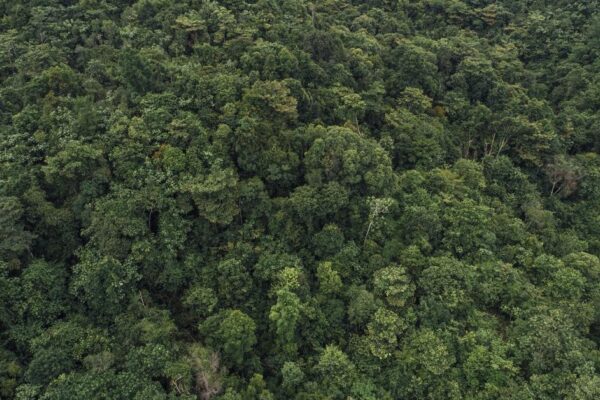
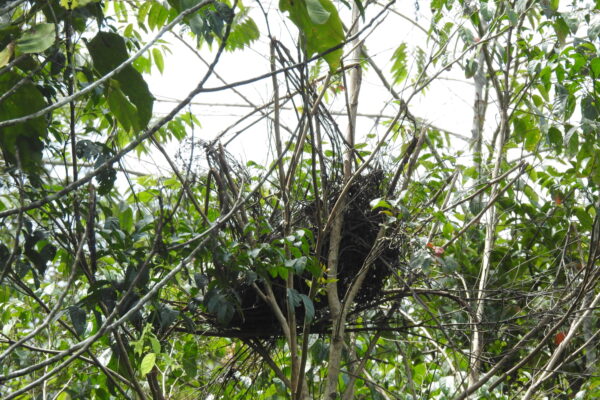
A survey of Lae Kombih Forest Park in Subulussalam, Aceh, recorded a Sumatran orangutan mother with her young, 13 nests (most of them in kapur trees) and 18 other wildlife species, nine of them threatened with extinction.
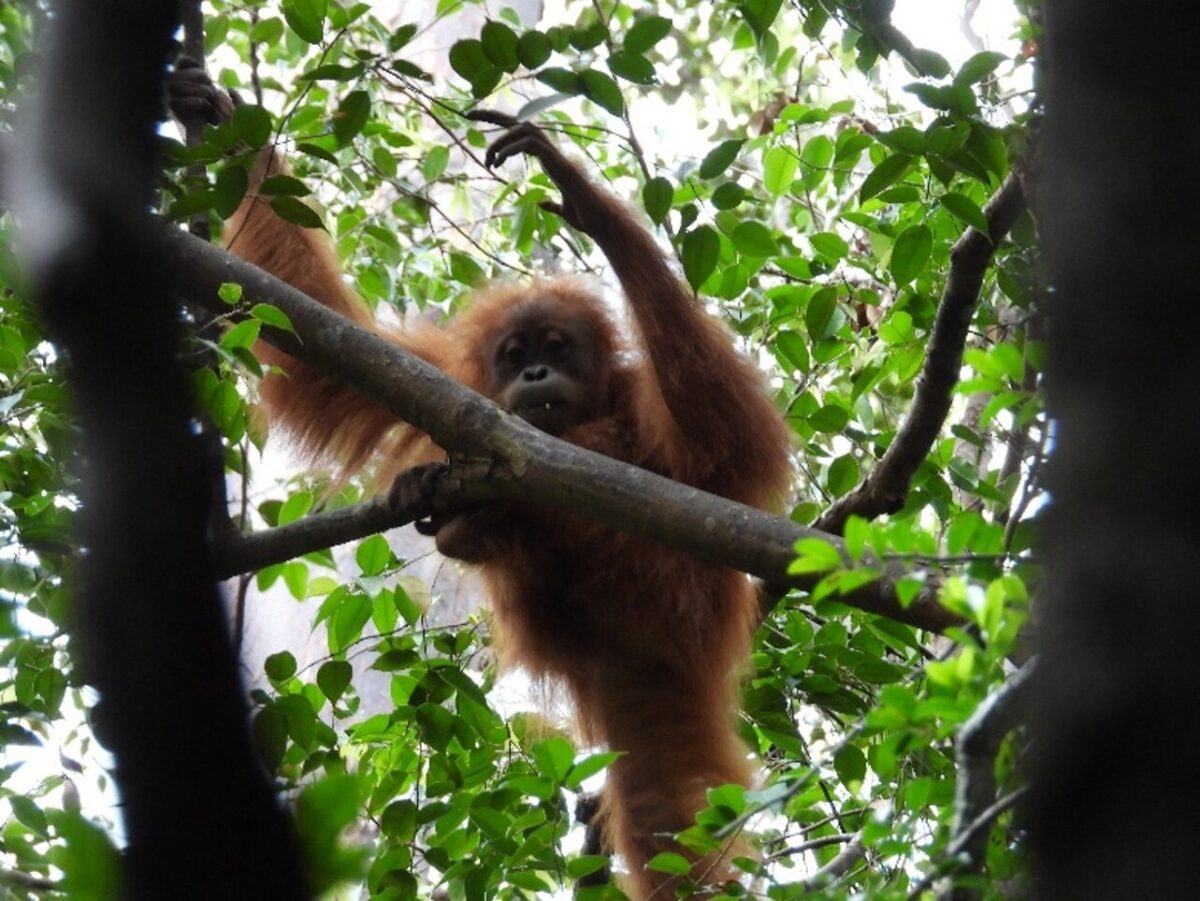
Subulussalam, Aceh — High in the canopy of Lae Kombih Forest Park, the survey team saw what they had come looking for: a Sumatran orangutan mother with her young. Nearby were nests that had been built only recently.
For a Critically Endangered great ape found only in Aceh and Northern Sumatra, that sighting matters. A mother raising young here shows the forest is more than a place orangutans pass through. It is somewhere they are breeding.
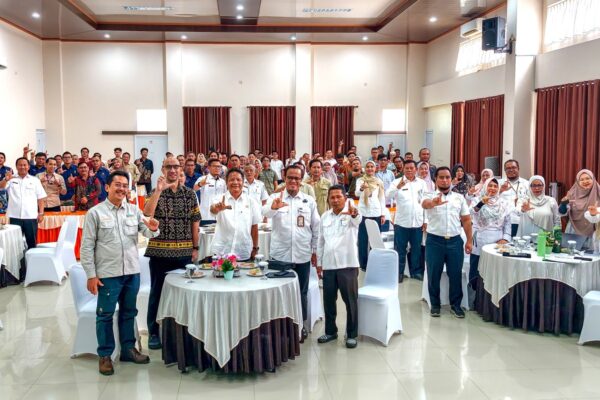
The survey was carried out in 2025 by Earthworm Foundation (EF), the Subulussalam City Environment and Forestry Agency (DLHK) and local civil society organisations such us the Orangutan Information Center (OIC) and Yayasan Inisiatif Berkelanjutan Indonesia (IBI). The team brought together four biodiversity specialists (plants and animals), a development partner, and forest rangers from the park’s own patrol unit. Their job: find out what lives in this 1,482-hectare park (about 15 km²) and which species most need protecting. They recorded at least 63 tree species, and focused their wildlife survey on one key animal: the orangutan.
Counting Nests to Count Orangutans
Orangutans are hard to spot, but they leave clear signs. Every evening each one bends branches into a fresh sleeping nest high in the trees. The team walked four survey lines (transects) through the forest and counted 13 nests.
From these nests they estimated about 1.98 orangutans per square kilometre, or roughly two animals in an area the size of 140 football pitches. Nest-based estimates depend on assumptions about how often nests are built and how fast they decay, so this is an indication of how much the forest is used, not a headcount.
The Tree Orangutans Choose
One tree stood out: kapur (Dryobalanops aromatica). Of the 13 nests, eight were built in kapur trees.
Kapur is also the most common tree in the park. It ranks among the five most important species at almost every stage of growth, from saplings to mature trees, across nearly all survey plots. It was fruiting during the survey, so kapur fruit was the most frequently recorded of the nine orangutan food fruits the team found. About 90% (38 trees from 40 trees) of tree species recorded at the pole stage can provide food for orangutans.
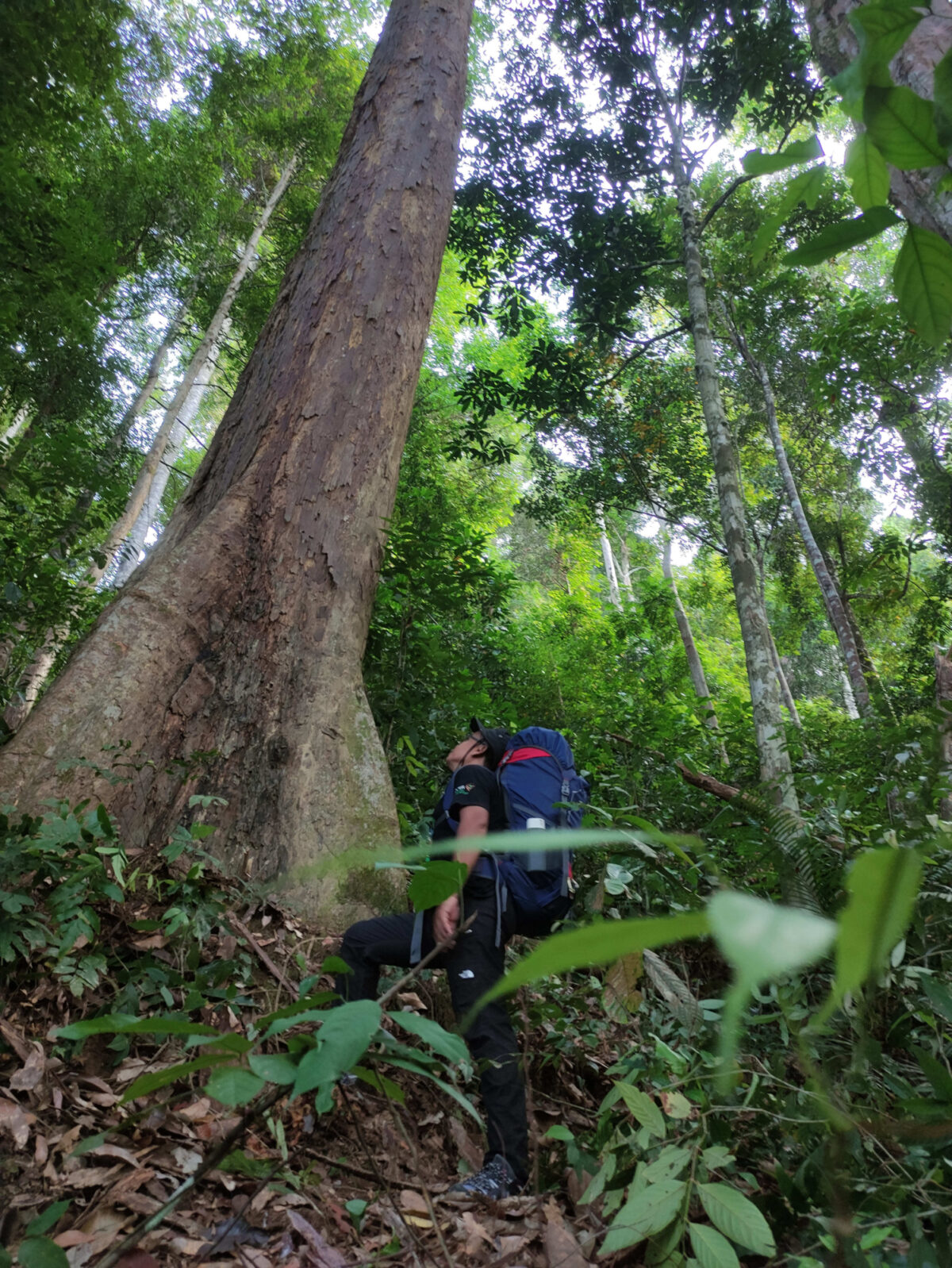
The tree is itself under pressure: the IUCN Red List classes kapur as Vulnerable.
For people in Subulussalam and Singkil, kapur is more than a tree. Its fragrant resin, known as Barus camphor after the old trading port on Sumatra’s west coast, was traded to China, India and the Middle East for well over a thousand years. Local communities still regard it as the signature tree of their region and a source of livelihood. Currently, kapur trees are widely used to produce resin and camphor crystals for the pharmaceutical, perfume, and essential oil industries. Their timber is also used in construction and carpentry. If these uses lead to tree felling and reduce the availability of kapur trees in the ecosystem, they could also reduce the availability of nesting sites for orangutans.
Eighteen More Species, Nine Under Threat
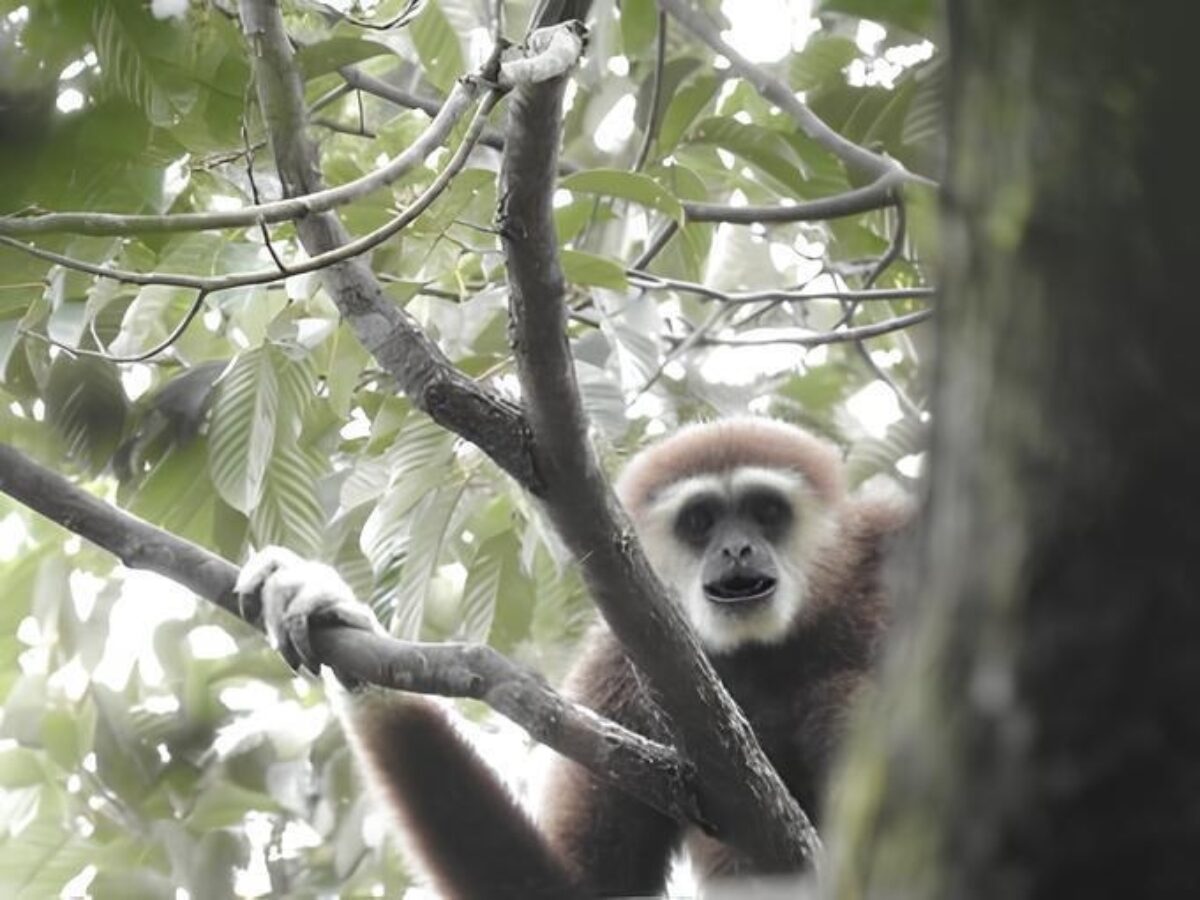
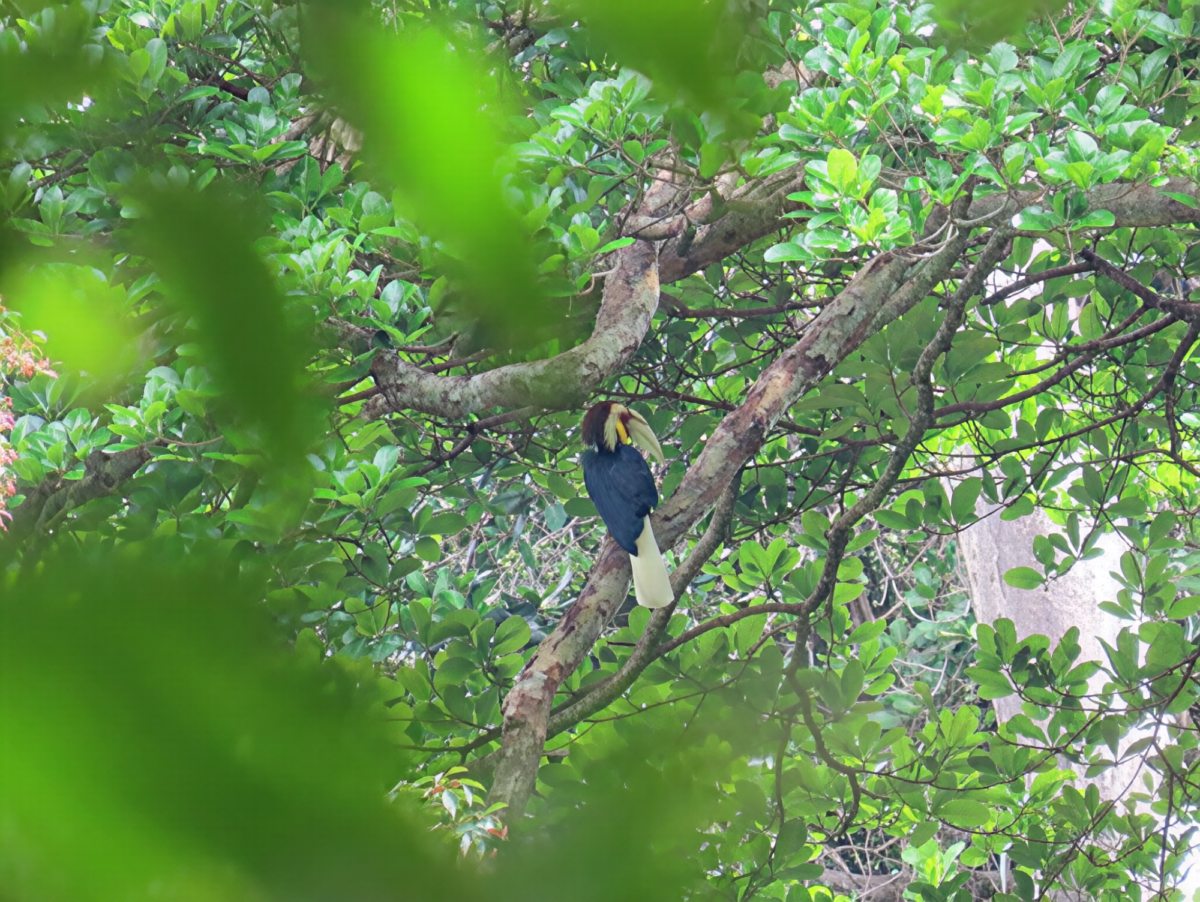
Orangutans were surveyed systematically. Along the way, the team also recorded 18 other wildlife species, from sun bears and siamangs to three species of hornbill. This list is a snapshot of what the team encountered, not a complete inventory.
Nine of the 18 are threatened on the IUCN Red List. The Helmeted Hornbill is Critically Endangered, the last category before extinction in the wild. Four are Endangered and four are Vulnerable.
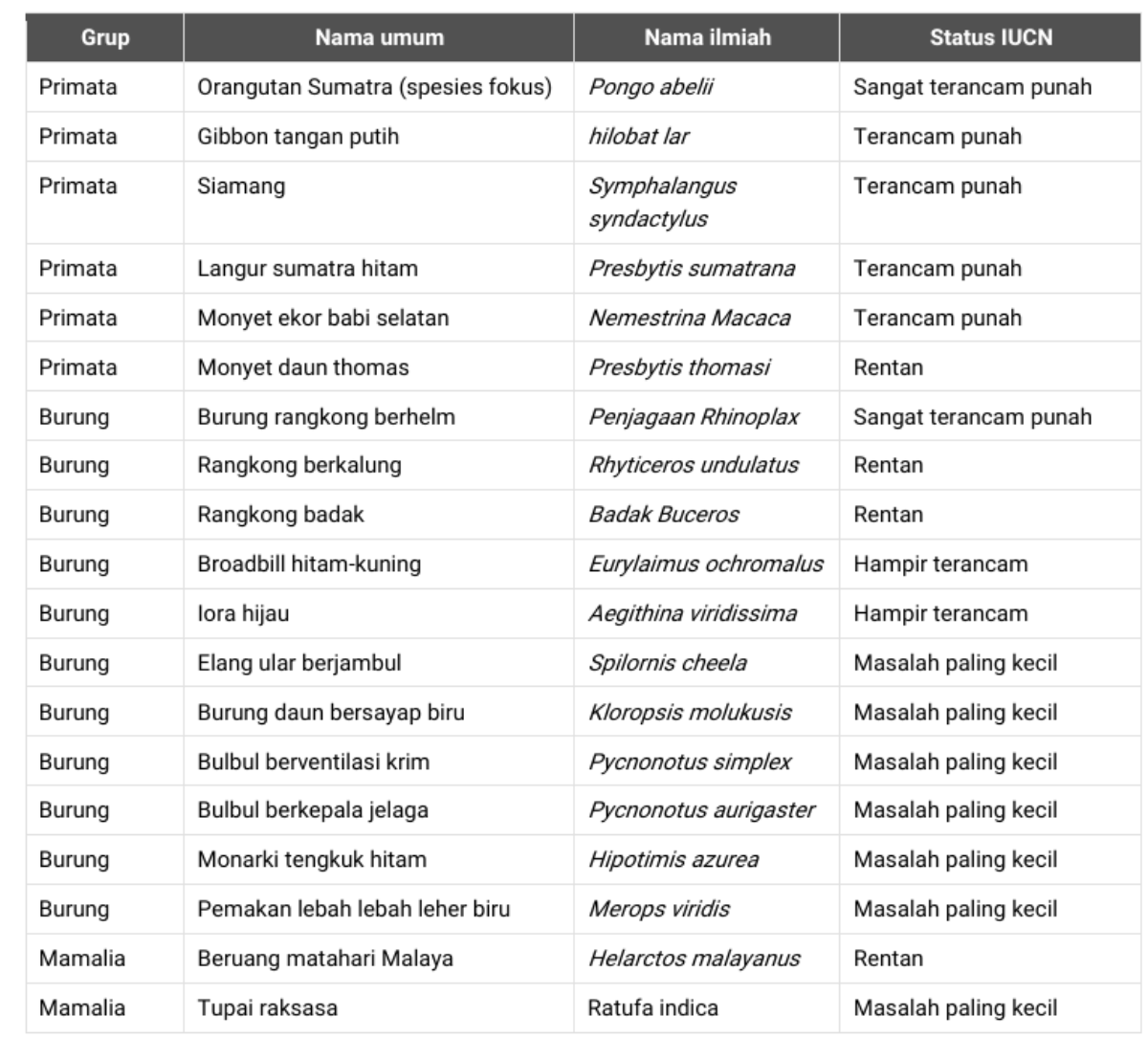
Several are also listed under CITES Appendix I (gibbon, siamang, sun bear and Helmeted Hornbill) or Appendix II (Wreathed and Rhinoceros Hornbills), and ten are protected under Indonesian law (Government Regulation No. 106/2018).
The Road through The Forest
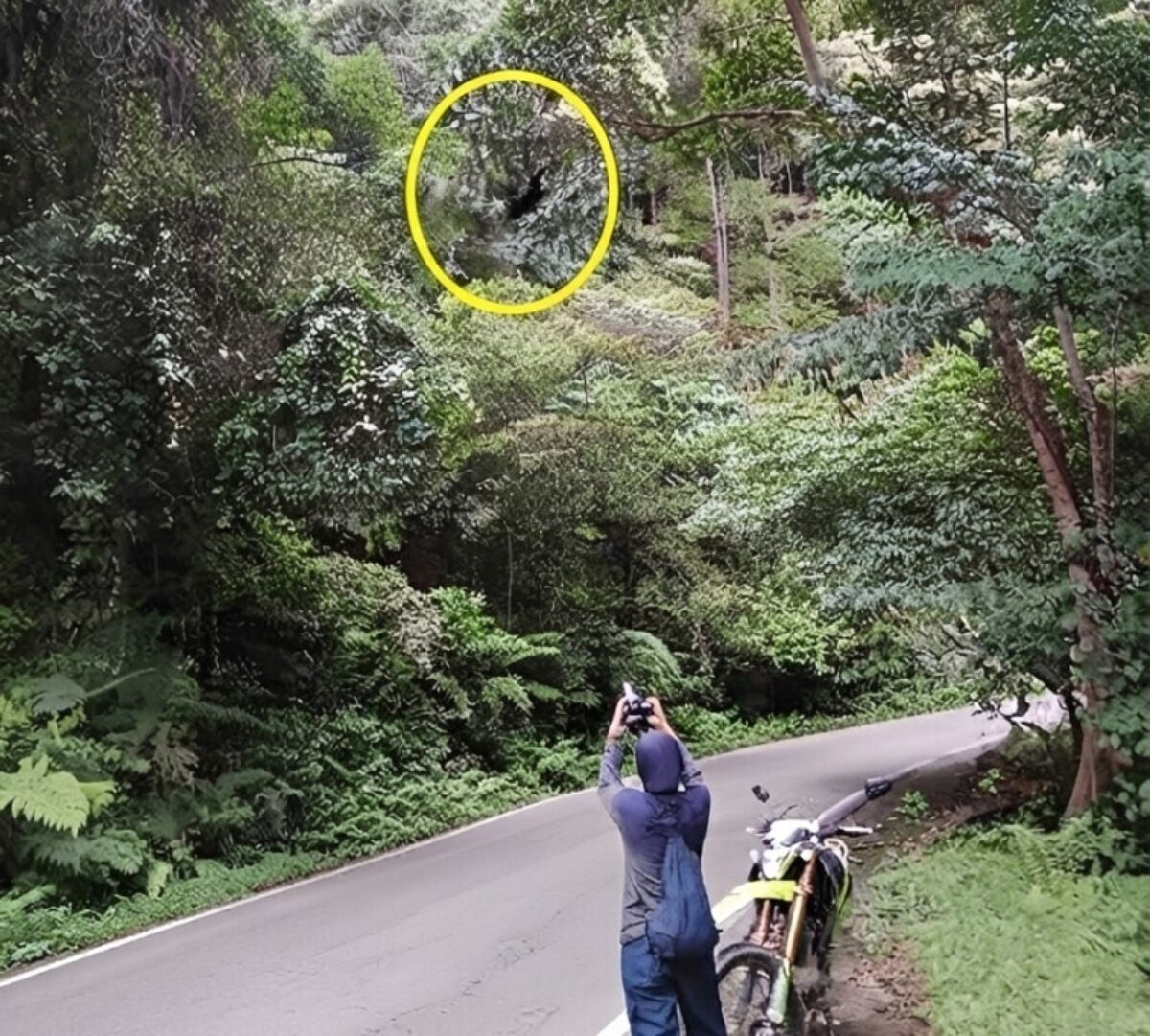
A busy interprovincial road cuts through the park, a risk for animals that cross it or move through the canopy on either side. The nests were found on kapur trees, with the entire transect located in the northern part of Lae Kombih Forest Park.
Why This Survey, and What Comes Next
The survey grew out of work with the two villages next to the park. Through Participatory Land Use Planning (PLUP) [link to PLUP article], communities in Lae Ikan and Jontor mapped their land and agreed which areas should be protected. Most of those protection zones lie inside the forest park. Under an agreement between EF, the Subulussalam City Government and the two villages on managing natural resources, the survey set out to show what those zones hold. EF had earlier supported the park’s long-term management plan.
The findings go to DLHK, which manages the park, to inform future management and conservation efforts, including updated biodiversity monitoring, ranger patrol priorities, regular surveys, and measures to improve wildlife protection along the interprovincial road. Particular attention should also be given to protecting kapur trees, an iconic species of the park, and preventing logging and other activities that could disrupt the ecosystem.
“That future collaboration and support from various stakeholders are essential for managing the conservation forest, particularly through routine patrols and area protection to ensure its sustainability,” said The management of Tahura Lae Kombih, represented by the Head of the Tahura Division at the Subulussalam City Environmental and Forestry Department.
Rikto, a Field Manager at Earthworm Foundation (EF) at the time, explained “The findings of orangutans and their nests in Tahura Lae Kombih show that this area is not merely a corridor, but remains an important habitat where orangutans can live and reproduce. The presence of orangutans is closely linked to forest conditions and the availability of important tree species such as kapur. Therefore, protecting their habitat means more than simply maintaining forest cover; it also requires ensuring that trees used for nesting and feeding remain protected. These survey findings provide an important basis for strengthening the management and protection of the Forest Park through collective action.”
****
The Aceh landscape programme is supported by ADM Cares, Avril Group, Colgate-Palmolive, Fuji Oil, General Mills, Givaudan, Hershey, Mars Inc., Nestlé, Reckitt, The Clorox Company and the Swiss State Secretariat for Economic Affairs (SECO), with active support from local communities, local governments and other stakeholders.