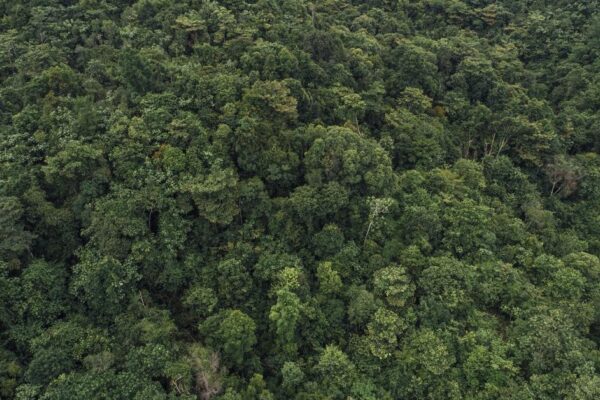
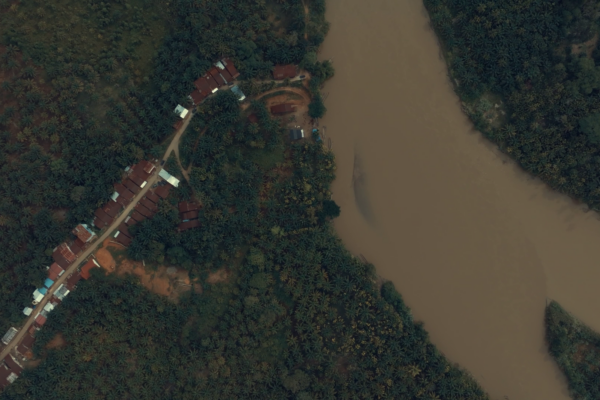
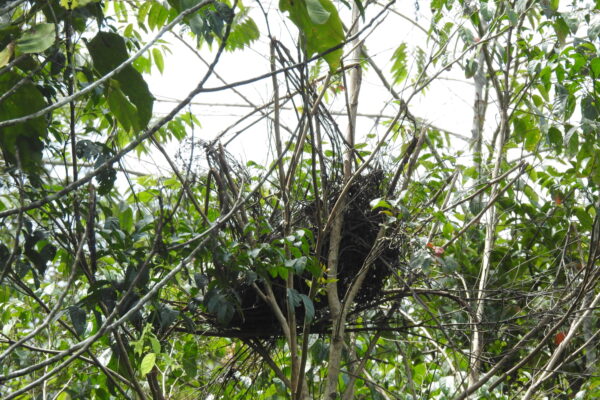
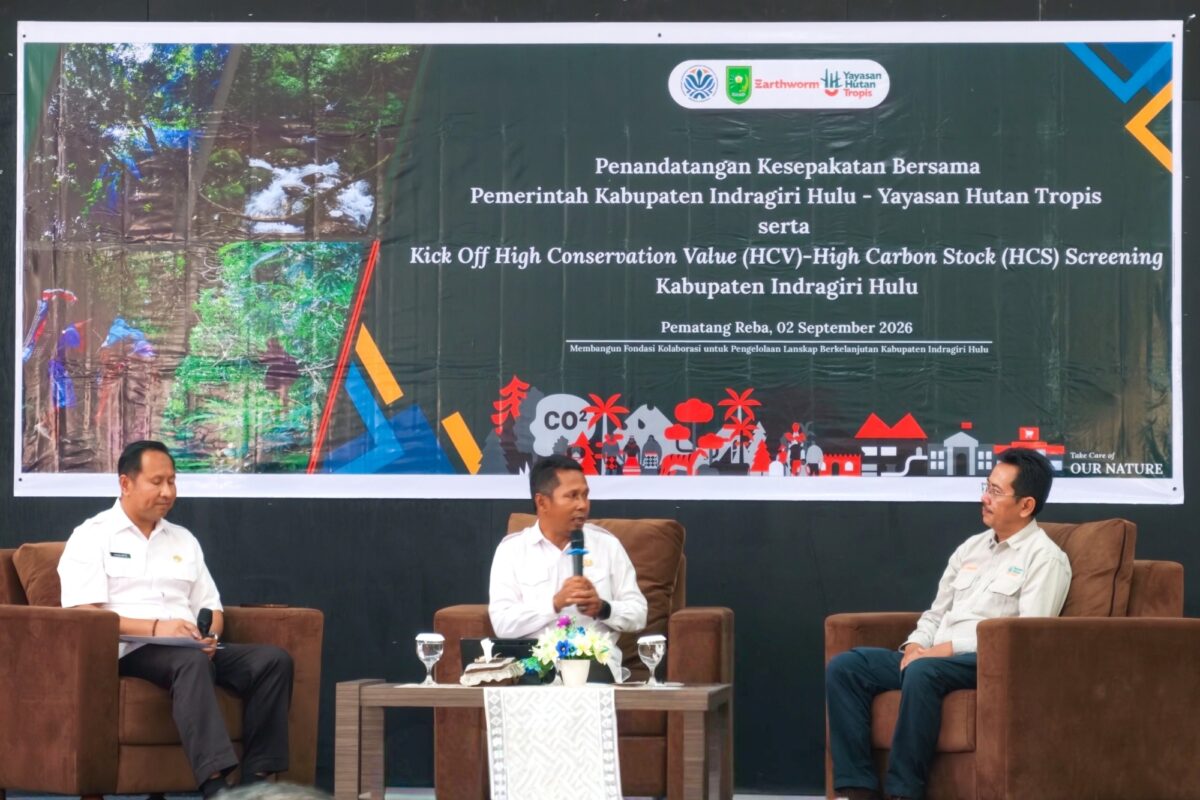
Indragiri Hulu, Riau, 2 September 2026 – The Environmental, Sanitation and Parks Office of Indragiri Hulu District, Riau, is partnering with Earthworm Foundation to launch a High Conservation Value (HCV) and High Carbon Stock (HCS) screening initiative, an initial step towards strengthening sustainable landscape management in the district.
The screening will provide an initial assessment of areas that may hold important conservation values and carbon stocks, helping to build an evidence base for decisions around land management, protection and development.
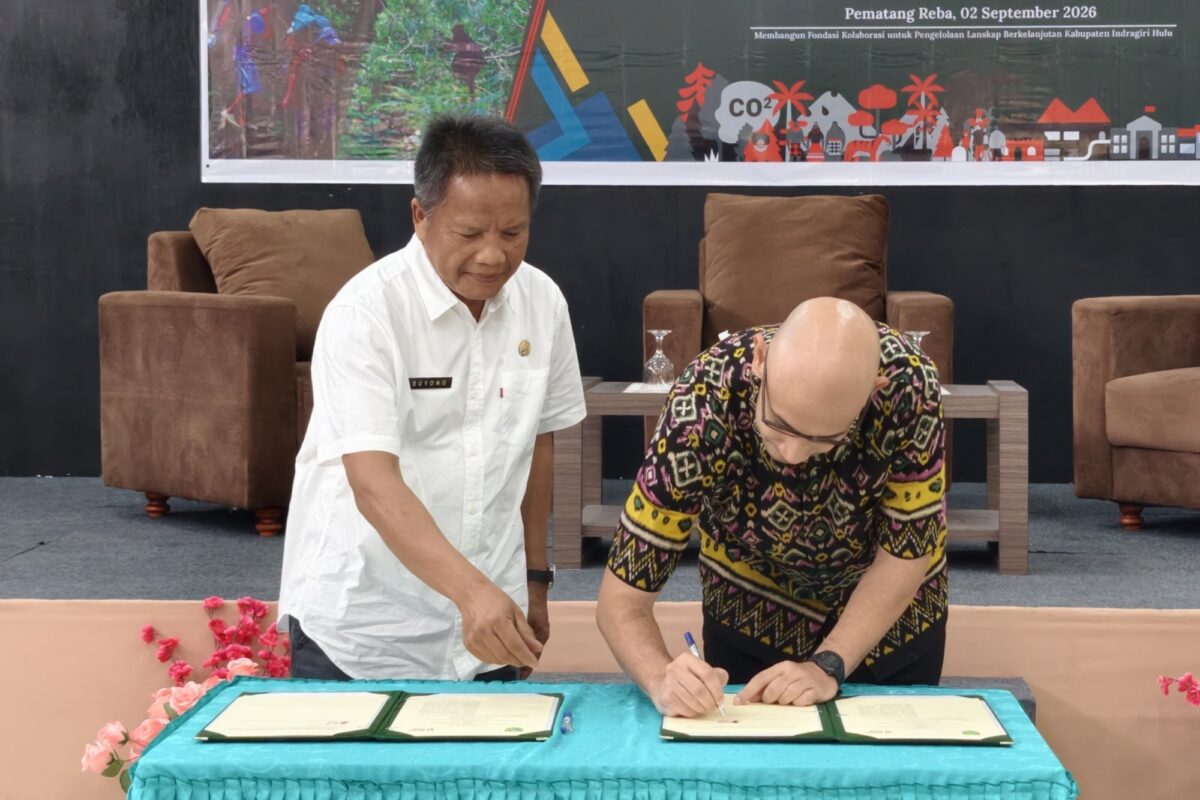
Around 87 representatives from local government, companies, civil society organisations, smallholder farmer cooperatives and other stakeholder groups took part in the initiative’s kick-off. The meeting established a shared understanding of the screening approach and began identifying the data, information and collaboration needed for its implementation.
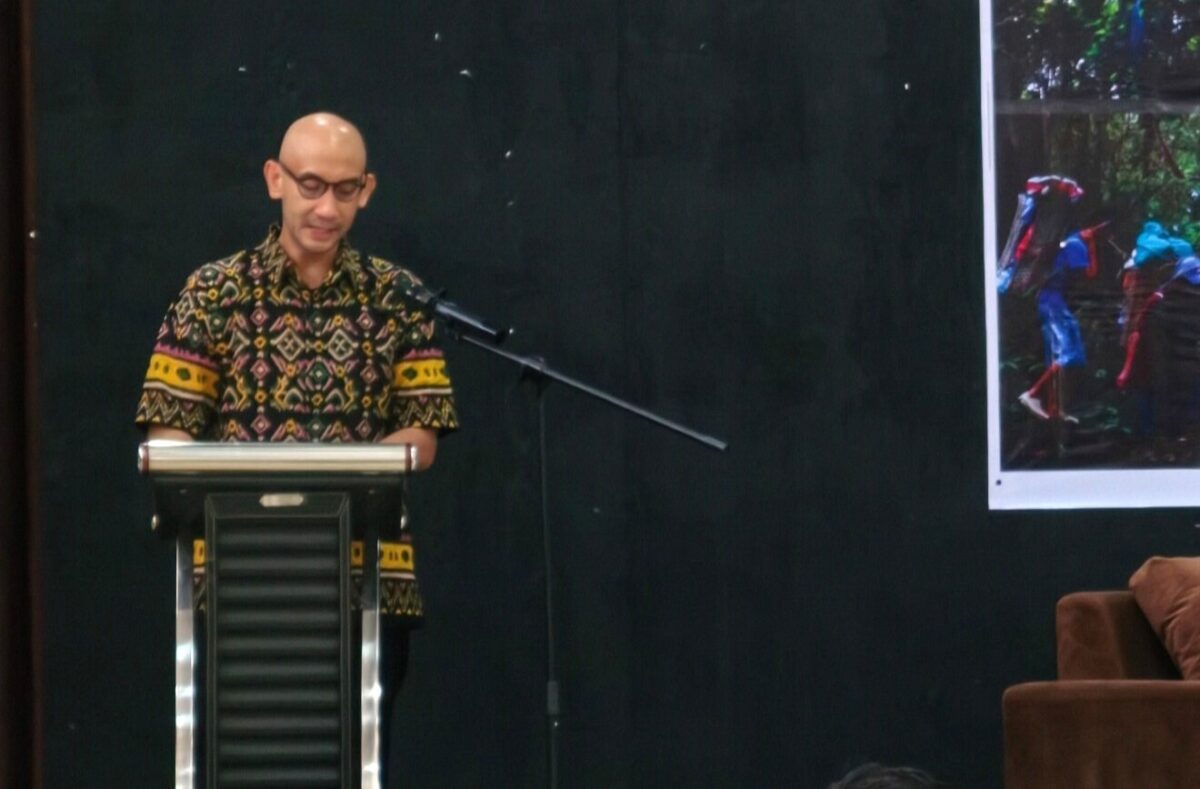
In his opening remarks, Dean Affandi, Field Programme Lead at Earthworm Foundation Indonesia, said: “We need a systematic management strategy based on accurate spatial data and a shared understanding among all stakeholders. This is where the urgency and relevance of the initiative we are launching today lie. The success of this process will depend greatly on openness, input, local data and the commitment of all involved.”
The expansion of oil palm plantations, industrial timber plantations and other land-use activities has contributed to the local economy and people’s livelihoods. At the same time, changes in land use can place pressure on natural forests and local social and ecological systems, reinforcing the need to consider areas with significant ecological, social, cultural and carbon values in land management decisions.
Elphari Adha, Head of the Environmental, Sanitation and Parks Office of Indragiri Hulu District, said the local government is committed to ensuring that development is grounded not only in economic and social considerations, but also in environmental sustainability.
“We do not want development to take place at the expense of the environmental values that exist in our landscape. Rather, we want development to move forward while safeguarding our natural resources, maintaining ecosystem functions and delivering benefits for communities,” he said.
The importance of science-based approaches to landscape management was also highlighted by Suyono, Expert Staff to the Regent for General Administration of Indragiri Hulu.
“Through this HCV-HCS Screening Kick Off, we are taking an important step towards mapping and identifying areas with significant ecological values, high biodiversity and substantial carbon stocks across Indragiri Hulu. The HCV-HCS approach can provide an important science-based foundation for spatial and development planning, environmental protection and strengthening economic competitiveness,” he said.
Data, knowledge and responsibilities relating to the landscape are distributed across government, companies, communities, civil society organisations and academia. Bringing these perspectives together is essential to developing a more complete understanding of the landscape and supporting the HCV-HCS screening process.
Yadi Kuswandana, Field Support Manager at Earthworm Foundation, explained that the screening can help identify priorities for protection, management and monitoring, while supporting development planning and land use that take environmental, social and economic considerations into account.
“The findings are expected to provide a scientific basis to support relevant regulations and identify priorities for further verification and assessment. Importantly, the screening does not constitute a final designation of HCV-HCS areas but provides a basis for stakeholders to determine appropriate next steps,” he added.
The findings can support responsible resource management efforts across Indragiri Hulu, including forest and peatland protection, biodiversity conservation, sustainable oil palm development and responsible management of industrial timber plantations, in line with No Deforestation, No Peat and No Exploitation (NDPE) principles.
By creating a stronger shared evidence base, the initiative aims to support collective efforts to manage and develop the Indragiri Hulu landscape more sustainably.
The initiative forms part of a wider collective effort under Earthworm Foundation’s Riau landscape programme, financially supported by Barry, Callebaut, Clariant, Colgate, Givaudan, Kenvue, LVMH, Nestlé, PZ Cussons, Reckitt, Target, Walmart Foundation, and strengthened through the engagement of communities, local government and other local stakeholders.
****
Media Contact
Novaeny Wulandari, Senior Regional Communications Officer, Earthworm Foundation n.wulandari@earthworm.org
About Earthworm Foundation
Earthworm Foundation is an impact-driven non-profit that works with businesses, civil society, communities, governments and other partners to tackle environmental and social issues in sourcing landscapes and supply chains. With expertise in supply chains, social issues and the environment, Earthworm works across regions to improve conditions for workers, protect forests and restore ecosystems affected by palm oil, rubber, cocoa and other commodities. In Indonesia, Earthworm operates through Yayasan Hutan Tropis. Find out more at earthworm.org.