On a still morning in the growing season, if you crouch beside a hedgerow and listen, you might hear the hum before you see it, the low, steady drone of a wild bee on its daily pilgrimage.
We often say that bees are a sign of a healthy ecosystem. But what if they’re more than that? What if they are storytellers, messengers carrying tales of blossoms, trees, and the breath of the soil itself? Each bee that slips into the world beyond its nest becomes part of a quiet choreography, writing a record of place with every flight.
As it visits flowers scattered across fields, forest edges and farm plots, it gathers more than nectar. In its tiny body, it collects traces of pollen, of air, of the chemicals and species surrounding it. When it returns to its nest, it carries home a record of place.
It is this sacred routine that BeeOdiversity is learning to listen to.
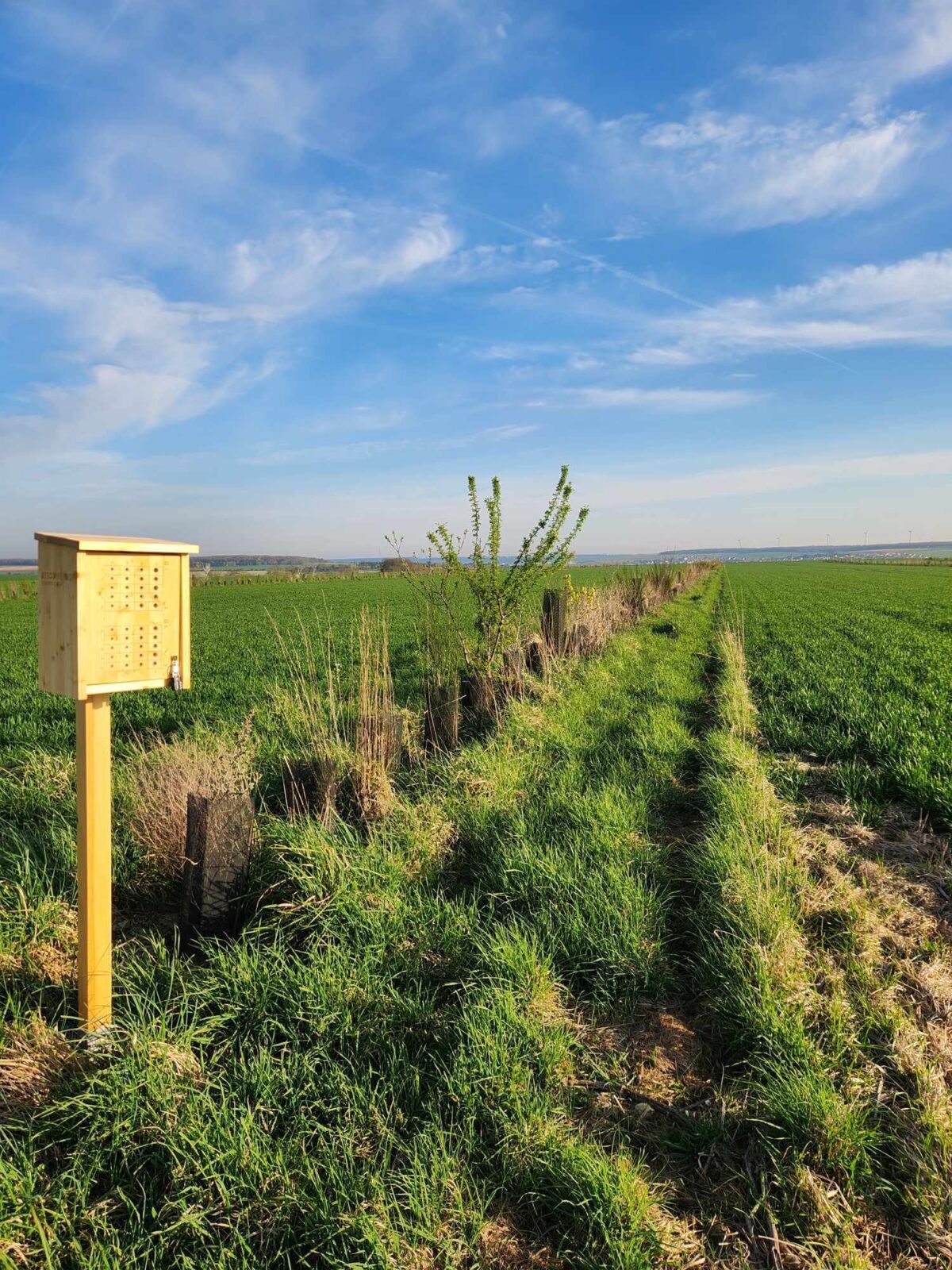
With their wooden BeeÔtels, simple, unobtrusive shelters, they offer wild bees a home. In return, they receive stories written in pollen and clay. The bees, in their humble way, become field researchers, tireless and impartial.
At the heart of this is the BeeOmetrics project. Launched in 2024, it pairs the wisdom of bees with the curiosity of science. With support from the European Innovation Council and through partnerships with Earthworm Foundation, this work invites farmers into a deeper relationship with their land, one where they become caretakers, observers, and co-learners with the bees.
Agriculture has always danced with nature. Fields are not only places of production but living systems shaped by generations of hands and roots. The soil, the trees, the insects and crops all share a fragile rhythm, one that modern farming must increasingly learn to respect.
This is where BeeÔtels come in. Designed by BeeOdiversity to blend quietly into the landscape, these small wooden shelters invite wild bees, mostly solitary ones, to nest within them. A quiet invitation for nature to do what it does best.
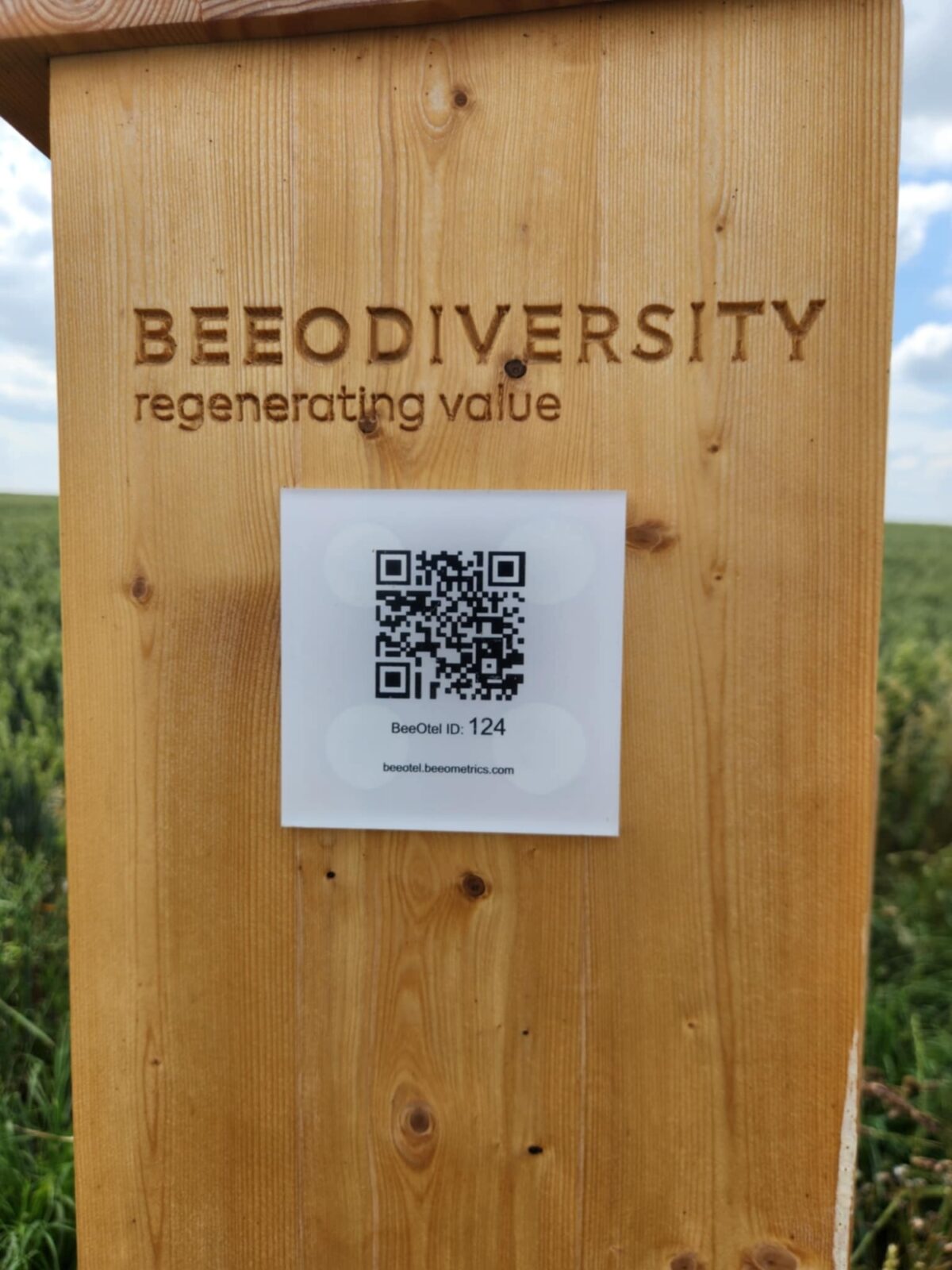
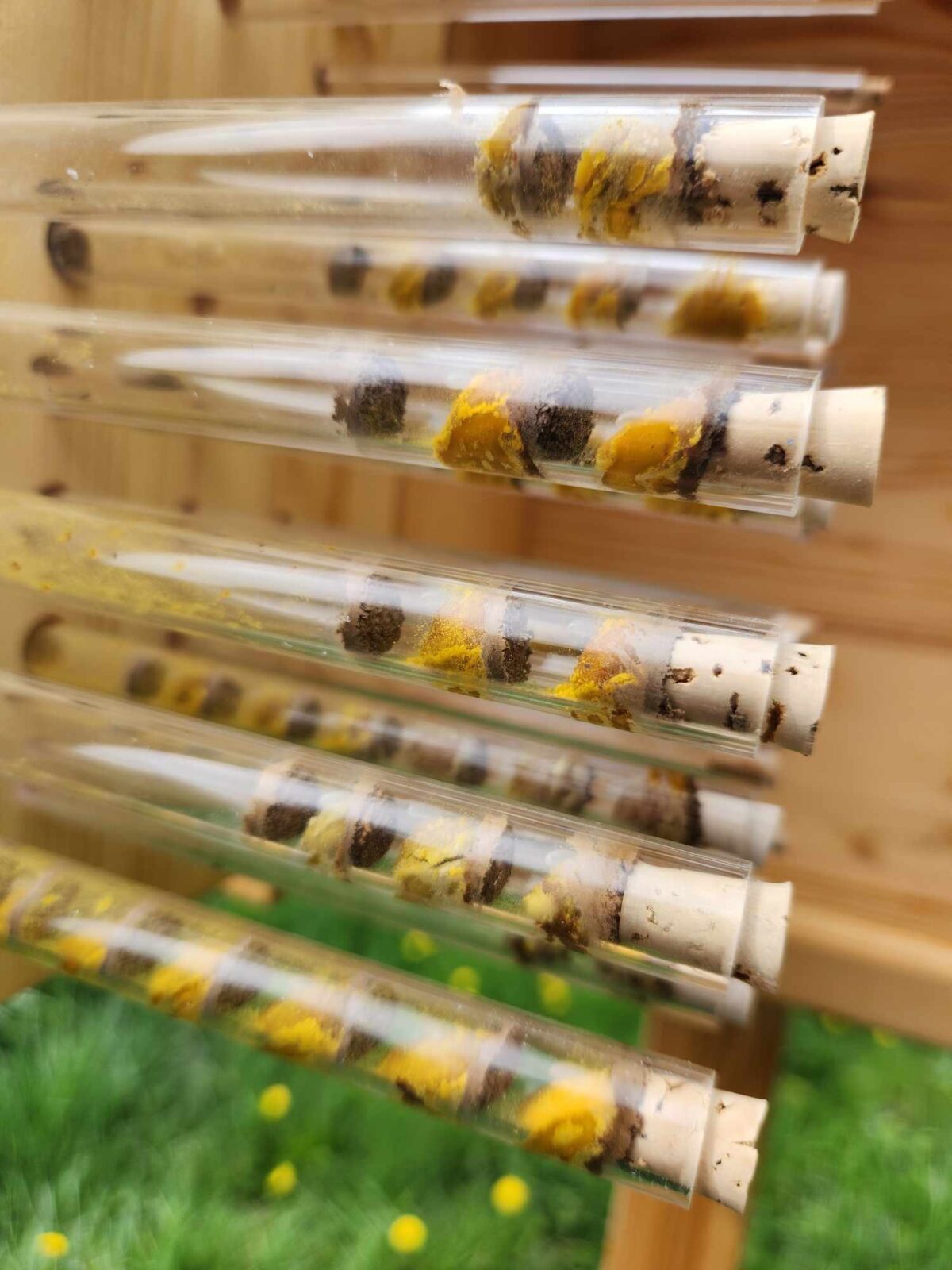
Each BeeÔtel contains two dials, dotted with hollow tubes. Every hotel is marked with a QR code and a number, making it easy for farmers to keep track of them. It’s a small gesture of stewardship, a farmer leaning in to observe.
“Every two weeks, the farmer takes a moment to scan the code, photograph the dials, and carefully replace the tubes that have been occupied. When a bee lays an egg, it seals the tube with a cap made from soil or resin, leaving behind a trace of where it’s been - a mix of pollen, sometimes nectar, and the stories of nearby plants” shares Quentin Meekers, Biometrics Lead (Biodiversity).
Inside these tiny capsules is a wealth of knowledge.
Scientists can extract DNA to identify plant species in the area and use chemical analysis to detect environmental pollutants. Even the caps themselves hold clues;
Their texture, shape, and makeup can tell which species of bee has nested there and how active the local population is.
With the help of Artificial Intelligence (AI), all this information is processed into a clear picture of environmental health. From this, BeeOdiversity then offers recommendations to reduce pollution, enhance biodiversity and create a better balance on the land.
“This year, Earthworm Foundation joined the journey by placing BeeÔtels on two French farms in Gennes-Ivergny and Sauvillers-Mongival. The goal was to understand how trees, especially hedges, influence biodiversity and environmental quality” shares Pauline Caron, Agroforestry Project Manager at Earthworm Foundation.
The BeeÔtels were distributed across three types of plots;
1. Open fields without trees,
2. Fields with young hedges under five years old, and
3. Those with mature hedgerows over a decade old, she shares.
Each site became a chapter in a living experiment, with bees as the clerks.
More than 100 capped tubes have been collected so far. The farmers have already carried out seven photographic surveys. A steady rhythm is forming, one of curiosity and care, that has been collected. The farmers themselves have already carried out seven photographic surveys. A steady rhythm is forming, one of curiosity, care, and collaboration between people and place.

Take a step into the field to learn how Pauline Carron, Agroforestry Project Officer at Earthworm Foundation, works with farmers and partners to transform agricultural landscapes in northern France. Together, they demonstrate that agroforestry is not just about planting trees, but about fostering harmony among people, nature, and livelihoods.
Since the launch of the BeeOmetrics project in 2024, nearly 200 BeeÔtels have been installed across Europe. Full results from the data collection will be published by early 2027 and will be available at www.beeometrics.com.
Earthworm Foundation plans to take this work further in 2026, integrating new sensors into the BeeÔtels to monitor additional indicators like air pollution (NO₂, NH₃, fine particles, PM2.5 and PM10), as well as temperature and humidity. Together, these data will help deepen our understanding of how trees affect not just biodiversity, but also the very air we breathe.
At its heart, this project is about regeneration, land, relationships, and how we observe and engage with nature. It reflects Earthworm Foundation’s belief that trees are our allies in farmland and that innovation doesn’t have to mean disruption; it can mean listening more closely to the systems that already work.
By partnering with bees and using thoughtful technology, BeeOmetrics offers a way forward, one rooted in science but also in humility. It is a reminder that sometimes, the smallest workers can show us the biggest truths. And that change often begins with the quietest of actions, a bee finding a home in a wooden shelter and a farmer choosing to pay attention.